

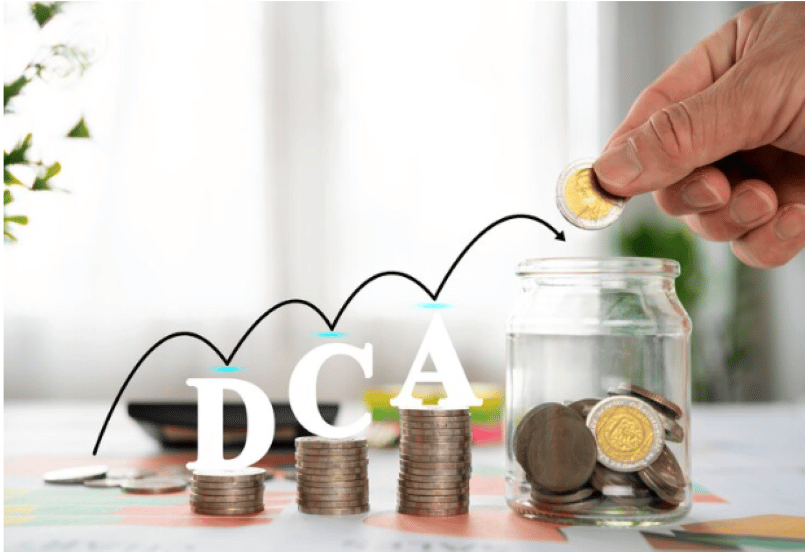
What Is Dollar Cost Averaging (DCA) and How to Use It in Crypto
Putting your whole investment in on the worst possible day is more common than it sounds: nobody knows in advance whether the price will rise or fall tomorrow. Dollar cost averaging (DCA) doesn’t promise to catch the best moment. It promises something more modest and more realistic — limiting the damage of getting it wrong, by spreading purchases over time instead of concentrating them on a single day.
This guide explains what DCA is, why it works as a mechanism (not a guarantee), a worked numerical example, how to apply it step by step, how to automate it, where it falls short of investing all at once, and how it’s treated for tax purposes in Europe. Nothing here is personalised financial advice.
What dollar cost averaging is
DCA means buying a fixed amount of an asset at regular intervals over a set period, instead of investing all available capital in one go. If you decide to put €100 a month into bitcoin, you buy €100 of bitcoin on the same day each month, at whatever price it trades that day, regardless of whether it rose or fell the week before.
It works with any asset that trades continuously, but it’s most widely used in crypto precisely because of how volatile the market is: the more the price moves, the more the timing decision matters, and the more sense it makes to remove it altogether. For anyone wondering what to do with crypto built up this way, the guide on the advantages of a prepaid card with Bitcoin covers how it can be spent in everyday life.
Why it works as a mechanism, not a guarantee
DCA doesn’t remove market risk or guarantee a profit. What it does is average out the purchase price over time: if the price drops after a purchase, the next scheduled purchase buys more units for the same amount; if it rises, it buys fewer. Over time, the average cost tends to smooth out compared with someone who invested everything at one unlucky moment.
Its second effect is less visible but just as important: it’s psychological. Setting the rules in advance removes the temptation to buy out of euphoria when everything is rising, or to sell in panic when everything is falling — two of the most expensive mistakes for inexperienced investors.
A worked example of DCA
Suppose, purely for illustration, that someone invests €100 a month in an asset for six months, at these hypothetical prices: €50, €40, €30, €35, €45 and €55 per unit. That investor buys 2, 2.5, 3.33, 2.86, 2.22 and 1.82 units each month: 14.73 units in total for €600 invested, an average purchase price of €40.73 per unit.
Someone who had put the full €600 in during the first month, at €50, would have bought 12 units. In this example DCA delivers more units for the same money because the price fell before recovering; in a scenario where the price only rose from the first month, the outcome would have been the reverse. That’s the point: DCA doesn’t win in every scenario, but it’s more predictable and less stressful in all of them.
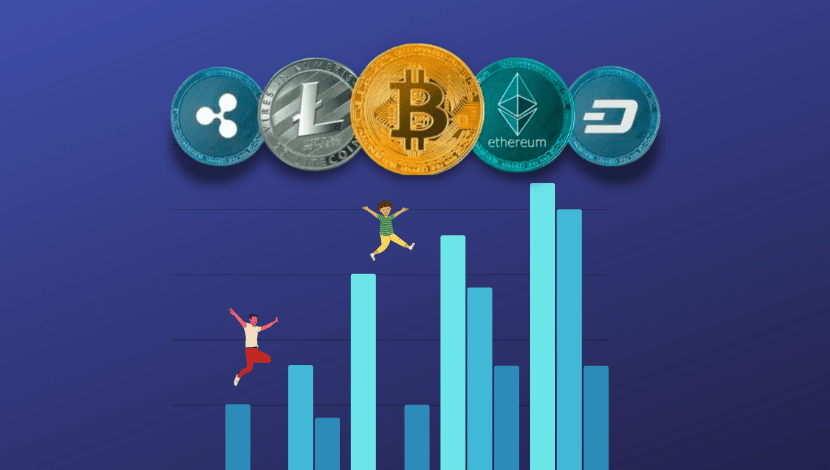
Dollar cost averaging can pay off particularly well in a bear market
How to DCA, step by step
Applying DCA comes down to four decisions, made once and then kept with discipline. The amount should come from what the monthly budget can genuinely sustain after fixed costs and an emergency fund, not from what feels exciting in a rising market.
- Fixed amount: how much goes into each purchase, a figure you can keep up even if the market goes badly for months.
- Asset: what you’ll buy on a recurring basis, ideally something you understand and plan to hold long term.
- Frequency: how often the purchase runs, weekly or monthly, ideally aligned with when you get paid.
- Duration: how long you keep the strategy before reviewing it, usually a horizon of several years.
The hard part isn’t understanding the rules, it’s sticking to them. When the price drops sharply, the temptation is to stop; when it soars, the temptation is to throw in more money at once. DCA’s value lies precisely in taking that emotional decision out of the equation.
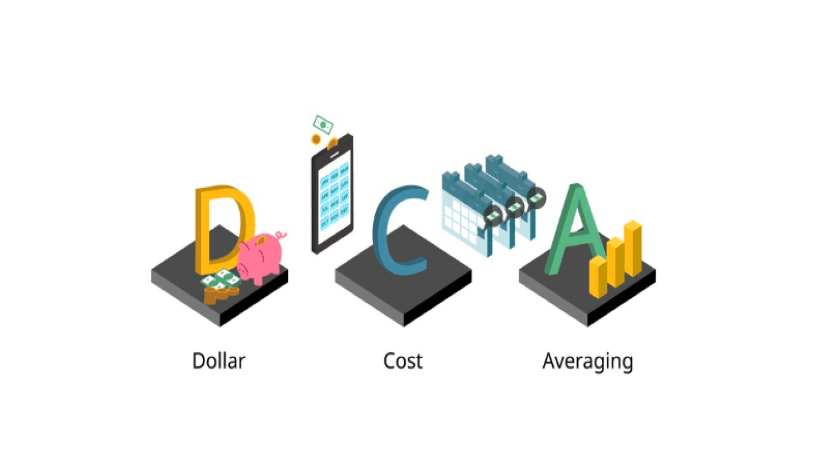
With dollar cost averaging, we stop trying to beat the market and stick to simple rules to build up an asset
How to automate DCA in crypto
Automating the process removes the need to remember to buy every week or month, which is exactly where most manual strategies break down. Bitsa’s savings feature lets you schedule automatic contributions in 13 cryptocurrencies, daily, weekly, monthly or yearly, from a €6 minimum: DCA logic without placing each purchase by hand. The Bitsa Free plan has no monthly fee, so starting doesn’t add a fixed cost on top.
Automation doesn’t change the asset’s risk: if the chosen cryptocurrency loses value over a sustained period, the strategy keeps accumulating units of something worth less. What it does guarantee is discipline, which is the part that fails most often when the process relies on monthly willpower.
Where DCA falls short of a lump sum
In markets with a sustained upward trend, investing all your capital at once (a lump sum) tends to beat DCA on average returns, for a simple reason: the money is invested earlier and captures the full rise. DCA doesn’t maximise returns in every scenario; it reduces the risk of bad timing and the stress of deciding when to buy, in exchange for potentially giving up some return in markets that only go up.
Nor does it turn a high-risk asset into a safe one. The European Securities and Markets Authority (ESMA) and the other EU supervisory authorities have repeatedly warned that crypto-assets are highly volatile and that investors can lose all the money invested. DCA in crypto makes sense with money you won’t need in the short term, never with your emergency fund.
How DCA is taxed in Europe
Across Europe, each purchase within a DCA strategy is a separate acquisition for tax purposes, with its own date and price. Buying is generally not taxed; selling or converting to fiat is. How the cost basis is worked out on sale depends on the country: Spain applies FIFO (first in, first out), while France uses a portfolio-wide method based on the total acquisition price. Either way, the more purchases you accumulate, the more complex the calculation becomes.
Keeping a record of every operation from day one saves a lot of work at tax time. And since 2026, the DAC8 directive requires crypto platforms operating in the EU to report their users’ transactions to tax authorities. This isn’t personalised tax advice; check your country’s rules or an adviser.
Frequently asked questions about dollar cost averaging
Does DCA guarantee making money?
No. It reduces the risk of buying everything at the worst moment, but it doesn’t remove market risk: if the asset loses value over a sustained period, the strategy loses too.
Is DCA better than investing all at once?
Depends on the scenario. In steadily rising markets, a lump sum usually delivers better average returns; DCA reduces timing risk and the stress of deciding when to buy, at the cost of potentially lower returns in those markets.
How do I DCA if my income is irregular?
Set an amount you can cover even in your lowest-income months, and use a monthly rather than weekly frequency. A small amount you keep up beats a large one you have to interrupt.
Does each DCA purchase count as a separate transaction for tax?
Yes. Each purchase has its own date and acquisition price, and the method used to calculate the gain on sale depends on your country, which is why recording every operation from the first one is worth it.
Can DCA in crypto be automated?
Yes, through scheduled contributions with a fixed amount and frequency. Bitsa’s savings feature supports this in 13 cryptocurrencies from €6, daily, weekly, monthly or yearly.