

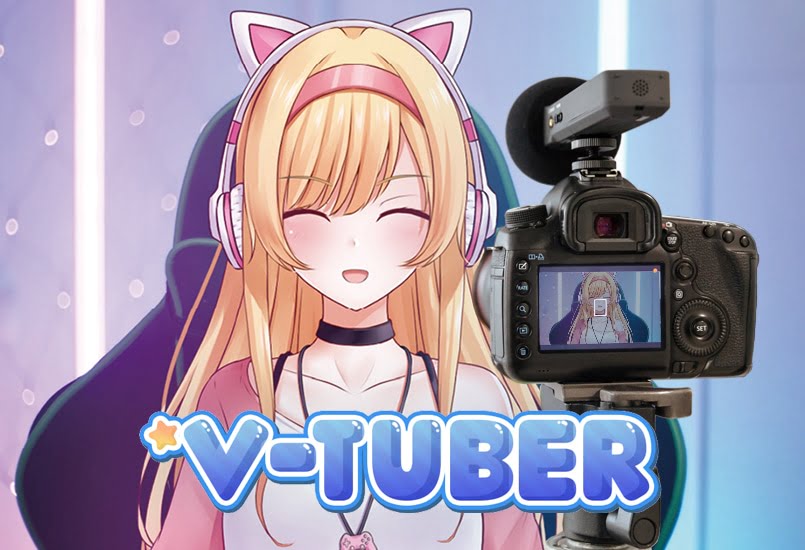
What is a VTuber and why are they so popular?
A VTuber is a digital content creator who uses an animated virtual avatar instead of showing their real face. This concept was born in Japan and has quickly transformed into a massive global phenomenon, with active creators and communities on YouTube, Twitch, and other streaming platforms.
Origin and history of VTubers
From Kizuna AI to the global virtual streaming boom
The term “Virtual YouTuber” (VTuber) became massively popularized in 2016 with the emergence of Kizuna AI. Although there were precursors, Kizuna AI was the first to use a 3D model with motion capture to create content actively and constantly, cementing the archetype of the “virtual idol.”
This initial success triggered the phenomenon in Japan, quickly attracting large corporations. The entry of specialized agencies such as Hololive Production and Nijisanji (managed by Cover Corp. and AnyColor Inc., respectively) professionalized the industry, creating “generations” of talent and a business model similar to that of idol agencies.

How Japan marked the style: virtual idols and anime culture
The aesthetics and style of VTubers are deeply linked to Japanese anime and idol culture. Avatars usually have highly detailed and cartoonish designs, exaggerated personalities, and often distinctive voices. The relationship with the community (“fans” or “viewers”) is intentionally close, imitating the devotion that exists toward pop idol groups.
Pioneering agencies like Hololive created “casts” of characters with stories and group dynamics, launching names that became well-known: Tokino Sora, Shirakami Fubuki, Roboco, Akai Haato, Aki Rosenthal, Natsuiro Matsuri, and the world-famous Gawr Gura. These models defined the global standard.
From Japanese phenomenon to global industry
While the phenomenon incubated in Japan, its jump to the global sphere was consolidated with the COVID-19 lockdown and the tireless work of fan translators. Subtitled clips of Japanese VTubers went viral in the West, clearing the way.
Soon, English-speaking and Spanish-speaking VTubers began to emerge, such as the popular Ironmouse, on the Twitch platform. This growth occurred both through agencies that created international branches (like Hololive English) and through independent creators who adopted the format.
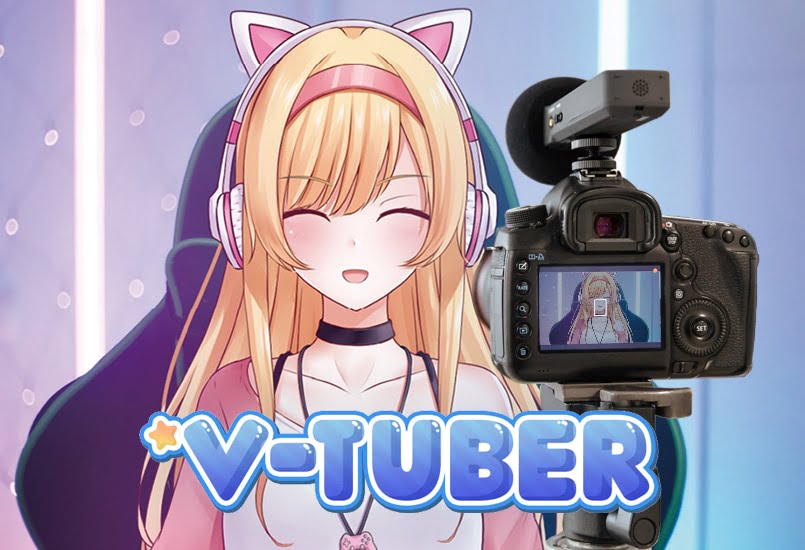
What exactly does a VTuber do? (content and formats)
Streams, videos, and most common content types
VTubers perform the same type of content as any streamer or YouTuber, but with the “layer” of their virtual character. Their most common activities include:
- Video Game Streams: From horror and RPG titles to rhythm or gacha games.
- Talks (Zatsudan): Casual conversations, interaction with the chat, and Q&A sessions.
- Music and Karaoke: Performing covers and, often, releasing original songs and albums.
- Dance and Performance: In the case of 3D models, performing choreographies.
- Collaborations (Collabs): Joint streams with other VTubers or human streamers.
- Reaction to Content: Videos or streams reacting to memes, music videos, or news.
- Edited Videos: More polished content uploaded to YouTube or short clips for TikTok.
How a VTuber differs from a classic YouTuber
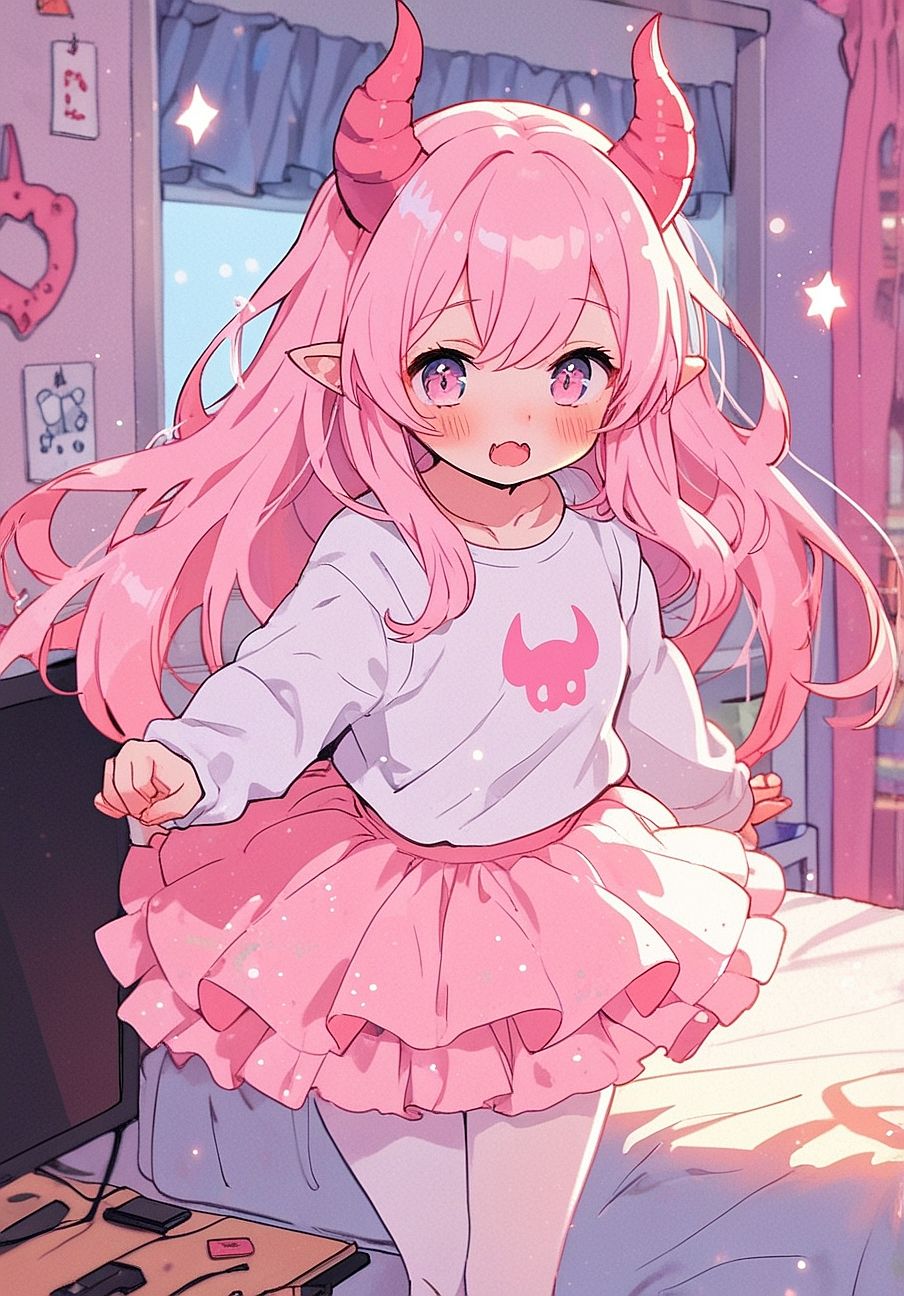
The key difference is the virtual identity. A VTuber uses an animated avatar (2D or 3D) that represents a fictional or semi-fictional character, instead of showing their real face.
The background content remains the same as that of a normal streamer, but the avatar adds a layer of narrative and fantasy. The viewer is interacting with an anime character, a demon, a sea creature, or a fantasy being, which creates a unique entertainment experience.
Why someone decides to be a VTuber
There are three main motivations for adopting the VTuber format:
- Anonymity and Privacy: The possibility of being a public figure and building a brand without exposing the real face. This is crucial for many creators, especially women, who seek to avoid online harassment.
- Fun and Creativity: The format allows for interpreting a character, building lore (background story), and being much more creative with the image than if they only used their real face.
- Comfort: It reduces the need to have an elaborate recording set, worry about makeup, or manage lighting, as the focus is on the virtual model.

Technology used by VTubers (including AI)
2D Avatars (Live2D) and 3D models
Technology is the engine of the VTuber phenomenon, with two main avatar formats:
- 2D Models (Live2D): These are static illustrations that come to life through animation software. The Live2D Cubism software is the industry standard. They require less computing power, and their animation is fluid (though limited) based on a webcam.
- 3D Models: Complete three-dimensional avatars. They are usually created with tools like VRoid Studio or professional modeling software. Their animation requires more advanced motion capture, either with special suits or with capture systems that track the entire body.
Tools like VMagicMirror are popular for models to follow the creator’s movement in real time.
Facial and hand tracking software
For the avatar to “imitate” the creator, tracking programs are used:
- Facial Tracking: Programs like VSeeFace, FaceRig, or PrprLive use the webcam to map the position of the creator’s mouth, eyes, and head, transferring these expressions to the 2D or 3D model in real time.
- Hand and Body Tracking: Dedicated devices like Leap Motion or motion capture systems (like Vive Trackers suits) are used so the avatar can move its hands or its entire body.
AI and VTubers: from assistant to protagonist
Artificial intelligence has entered the VTuber ecosystem in two ways, according to Business of Apps:
- Tooling for Creators: AI is used to improve facial tracking, generate automatic subtitles in multiple languages, offer faster video editing tools, and improve voice synthesis (text-to-speech – TTS). In this technological ecosystem, modern financial solutions like Bitsa facilitate the acquisition of these software licenses and specialized hardware for creators globally.
- 100% AI VTubers: Characters like Neuro-sama are fully automated VTubers. They use large language models (LLM) and TTS technology to speak, comment, and play live, creating an autonomous AI character. Additionally, there are open-source projects for AI VTuber engines that combine Live2D, automatic speech recognition (ASR), and TTS to create reactive characters.
Today, human creators who use AI as a tool and fully automated characters coexist, driving debates about authenticity in streaming.

Trends and growth of the VTuber phenomenon
From geek niche to part of the streaming mainstream
The VTuber phenomenon is no longer a niche; it is an integral part of digital entertainment. The growth data is undeniable: some VTubers have tens of millions of followers on social media, viewing hours on Twitch have grown by hundreds of percentage points year after year, and the VTuber software and services market is estimated to already exceed one billion dollars, with projections of strong growth until 2033.
Corporate vs. independent VTubers
The ecosystem is divided into two major branches:
- Corporate VTubers: They are managed by agencies (Hololive, Nijisanji, VShojo, etc.). They receive production resources, marketing, copyright management, and high-level collaborations, in exchange for giving part of their control and income to the agency.
- Independent VTubers: They work on their own. They have greater creative freedom and total control over their brand, although they usually have fewer resources for production and marketing. Many have scaled quickly thanks to the virality of clips on social media.
AI, virtual reality, and live shows
The near future of VTubers points to:
- Concerts and Live Shows: Use of virtual reality and augmented reality to perform massive events and concerts where avatars interact with real and virtual audiences.
- More Expressive Avatars: AI will significantly improve tracking, allowing for much more detailed avatars with a greater range of expression in real time.
- Coexistence with AI: Human VTubers will focus more on interaction and creativity, while AI will generate background content and fully automated characters, opening an ethical debate on authenticity and the future of human creation.
Outstanding examples of VTubers (global and in Spanish)
Iconic VTubers at an international level
- Kizuna AI: The pioneer who coined the term and the first to reach massive popularity, establishing the foundations of the format.
- Gawr Gura: A member of Hololive English, she holds the record for being the VTuber with the most subscribers on YouTube, exceeding 4 million, thanks to her playful personality and varied content.
- Ironmouse: A famous Spanish-speaking VTuber, she has broken records on Twitch for stream time and number of subscribers, standing out for her charisma and her focus on gaming and karaoke.
Spanish-speaking VTubers
The VTuber scene in Spanish has grown rapidly, adapting the anime aesthetic and the idol model to the public in Latin America and Spain. Examples like 2Huntleo demonstrate the mix of gaming and chat formats. These creators often incorporate elements of local culture into their streams, creating a bridge between Japanese-style entertainment and Hispanic audiences.
The case of AI VTubers like Neuro-sama
Neuro-sama is the paradigmatic example of the AI-driven VTuber. This character, created from complex language models, plays video games, comments live, and converses with the audience autonomously. Her popularity has made her a reference in the debate on how AI is redefining the role of the content creator in streaming.

Commercial aspects: how VTubers earn money
Basic monetization: ads, subscriptions, and donations
VTubers use the same monetization channels as traditional streamers, often with greater success due to the strong dedication of their community:
- Platform Ads: Income generated by advertising on YouTube (AdSense) and Twitch.
- Super Chats / Donations: The ability of fans to pay for a highlighted message during a stream. Some VTubers are consistently among the channels with the highest Super Chat income in the world.
- Channel Subscriptions and Memberships: Monthly payments for exclusive content or emotes.
Merchandising, original music, and collaborations
The virtual idol type business model allows generating income beyond streaming:
- Merchandising: Sale of figures, clothing, stuffed animals, and other collectible items of the character.
- Original Music: Many VTubers, especially corporate ones, release original songs and albums and close deals with record labels or music platforms.
- Collaborations: Paid agreements with video game, technology, or lifestyle brands.
VTuber agencies and corporate business models
Agencies like Hololive and Nijisanji (AnyColor Inc.) act as talent agencies for VTubers. Their business model consists of:
- Auditioning and selecting human talent.
- Managing production (creation of models, rigging, technical support).
- Handling marketing and monetization (merch negotiation and deals).
In exchange, the agency keeps a significant part of the creator’s income, in a business model that has proven to be extremely profitable.
Legal aspects and risks of the VTuber sector
Copyright, contracts, and ownership of the avatar
The nature of the virtual business poses important legal challenges:
- Ownership of the Avatar and Character: In the case of agencies, the company usually owns the 2D/3D model and the rights to the character (lore and name). The human creator only owns the right to operate the character under contract.
- Copyright in Streaming: As in all streaming, there is a risk of using music, images, or videos with copyright without permission or an adequate license.
- Contracts with Agencies: Contracts with virtual idol agencies are often strict in terms of confidentiality, exclusivity, and conditions for service termination.
Recent cases and controversies with agencies
As money has increased in the industry, so have conflicts. Controversies related to agencies like Anycolor/Nijisanji have been made public, facing criticism for the management of contract terminations and labor disputes with talent. Similarly, agency closures or model changes (like those experienced by VShojo) have illustrated that the VTuber industry is a serious and competitive business, susceptible to generating labor and reputation conflicts.
Digital regulations and IT-related laws
VTubers, being online content creators with the potential for massive income, are subject to the digital regulations of their operating countries:
- Data Protection Laws (GDPR, CCPA, etc.).
- Advertising and transparency regulations.
- Labor laws related to remote and independent work.
- Tax laws that apply to global income.
VTubers, crypto, and new digital models
The VTuber ecosystem, being digitally native, has naturally connected with Web3 trends and digital payments. Many VTubers, especially independents, have adopted direct digital payments through platforms that allow fans to send tips (including cryptocurmencies or innovative payment systems). There are also projects that combine VTubers with NFTs, where the avatar or associated art is sold as a digital collectible. These types of platforms seek to create new ways to support virtual creators beyond traditional donations, although this sector remains experimental and volatile.
Does it make sense to be a VTuber in the height of the AI era?
Perceived advantages: anonymity, creativity, and comfort
The classic reasons for being a VTuber remain, and AI acts as a facilitator:
- Anonymity and Creativity: The avatar allows for maintaining privacy while the creator focuses on the performance.
- AI Assistance: Artificial intelligence is democratizing production, allowing independents to create avatars, change voices in real time, and generate complex scenes without the need for a large studio.
Challenges: saturation, platform dependency, and AI ethics
The industry faces several challenges:
- Saturation: The low barrier to entry has caused great competition, making it difficult for new creators to stand out.
- Platform Dependency: Visibility and success still depend on YouTube and Twitch algorithms.
- AI Ethics: The use of generative AI for voices, art, or scripts has sparked debate in the community about originality and the preservation of human creativity versus automation.

Looking to the future: human VTubers, AI, and all that is to come
The future will likely not be “one or the other,” but a hybrid coexistence. We will see a mix of human VTubers using AI as an empowerment tool, alongside characters and avatars fully generated by AI that will create new content categories. Avatars will be increasingly realistic, expressive, and versatile, and new forms of monetization linked to the virtual experience will emerge.
Conclusion: VTubers as a new layer of online identity
The VTuber is a content creator who operates through an animated virtual identity. It has evolved from a niche of Japanese otaku culture to a global industry valued at billions of dollars. AI and motion capture technology are redefining the game, making avatars more accessible and sophisticated.
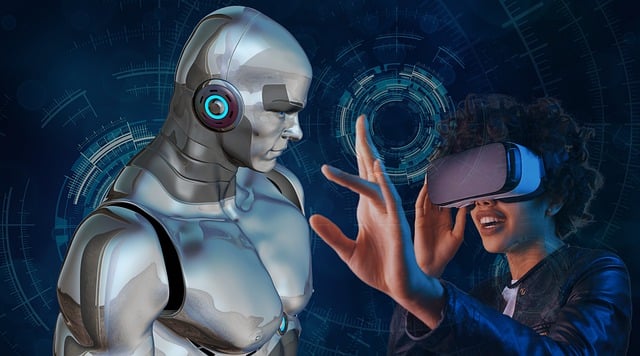
For those who want to take the professional leap and acquire capture hardware or specialized software licenses, having agile payment methods is fundamental. With Bitsa, you can manage your online purchases safely and without traditional banking complications, allowing you to equip your VTubing set-up instantly.
In the end, what matters is not whether the face is real or virtual, but the community, the entertainment, and the stories created around these charismatic characters.