


Cryptocurrencies That Rose and Fell the Most in 2026
Disclaimer: This article is for informational purposes only and does not constitute an investment recommendation. Past performance does not guarantee future results.
2026 has been a year of significant movements in the cryptocurrency market. While many cryptocurrencies have increased in value, others have lost a substantial portion of their value. And although Bitcoin remains the sector’s leading crypto, not all cryptocurrencies have performed in the same way.
If you’re curious about which cryptocurrencies have risen the most in 2026 and which have suffered the biggest losses, you’ll find the data in this article. We’ll also look at what’s happened to some of these projects and which news stories help explain their price movements.
How We Measure Which Cryptocurrencies Have Risen the Most
Finding out which cryptocurrencies have performed best this year isn’t about going on TikTok and watching influencers recommend shitcoins that have suddenly skyrocketed. We’re going to compare how much each one was worth on January 1, 2026, with its price on September 30. This lets us see the percentage gained or lost over these months.
The ranking is generally limited to the top 100 cryptocurrencies by market capitalization. This excludes smaller tokens, which often experience spectacular percentage gains but have very low trading volumes.
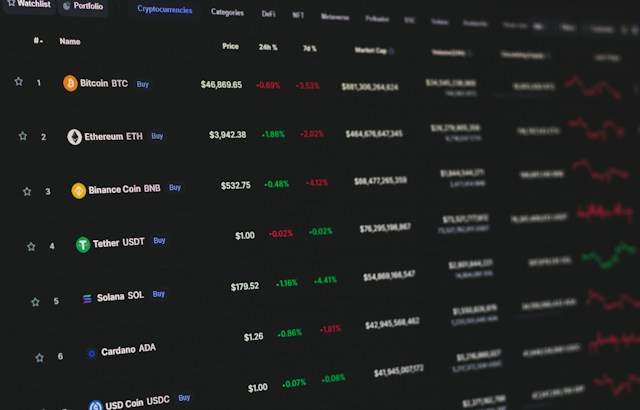
We’ll take the data from CoinGecko. There, you can check historical prices and each project’s market capitalization. To make the comparison fair, we’ll analyze all cryptocurrencies using the same dates and US dollars.
We calculate the change by comparing the initial price with the price on the cutoff date. The ranking only includes movements recorded during this period. This doesn’t mean that the cryptocurrencies that have risen the most will continue to do so.
The Cryptocurrencies That Have Risen the Most in 2026
These are the five cryptocurrencies that have risen the most within the top 100 by market capitalization, between January 1 and September 30, 2026.
| Cryptocurrency | Price on Jan. 1 | Price on Sep. 30 | Change | Market capitalization |
|---|---|---|---|---|
| Hyperliquid (HYPE) | $24.20 | $85.43 | +253.02% | $19,140,093,355 |
| NEAR Protocol (NEAR) | $1.63 | $5.24 | +221.47% | $6,875,310,825 |
| Zcash (ZEC) | $525.23 | $1,432.28 | +172.70% | $24,280,838,385 |
| JUST (JST) | $0.03930257 | $0.1286 | +227.20% | $1,053,209,263 |
| Uniswap (UNI) | $7.95 | $8.88 | +11.58% | $5,645,156,120 |
If you look at what’s behind these gains, you’ll find quite different reasons. Some cryptocurrencies have attracted interest because their projects have grown, while others have benefited from new features or increased activity on their networks. But keep in mind that not everything that drives a price up depends on the project itself.
Hyperliquid (HYPE) has generated substantial revenue through its protocol, while NEAR Protocol (NEAR) is making a strong push into artificial intelligence. You already know that anything involving AI attracts plenty of attention these days. Its goal is to develop tools for creating autonomous agents and expand the potential uses of its network.
For Zcash (ZEC), the focus is on privacy and updates that improve its technology. JUST (JST), meanwhile, is linked to TRON’s decentralized finance ecosystem. In this case, token buybacks and burns reduce the amount of JST in circulation.
And what about Uniswap (UNI)? Its strategy focuses on continuing to strengthen its position as the leading decentralized exchange protocol (DEX). During 2026, its team made progress on improvements to liquidity pool efficiency and the user experience. It has also been implementing tools that make it easier to integrate UNI into different DeFi ecosystems. These developments strengthen the protocol’s utility, although its performance also depends on external factors such as overall DeFi demand and market sentiment.
In any case, the fact that these projects are growing doesn’t mean their cryptocurrencies will continue to rise. Price also depends on demand, liquidity, and market behavior. That’s why, before getting carried away by a price surge, you should look at what’s really happening behind it.

The Cryptocurrencies That Have Fallen the Most
Not all cryptocurrencies have had the same luck as the five listed above. Here are the five cryptocurrencies that have lost the most value, also within the top 100 by market capitalization.
| Cryptocurrency | Price on Jan. 1 | Price on Sep. 30 | Change | Market capitalization |
|---|---|---|---|---|
| Dogecoin (DOGE) | $0.126799 | $0.0954 | −24.76% | $14,903,906,329 |
| Ripple (XRP) | $1.88 | $1.51 | −19.68% | $95,376,238,821 |
| Solana (SOL) | $126.96 | $119.75 | −5.68% | $70,429,172,599 |
| Ethereum (ETH) | $3,003.85 | $2,690.92 | −10.42% | $328,524,064,229 |
| Bitcoin (BTC) | $88,764 | $84,370.75 | −4.95% | $1,695,085,105,859 |
Clearly, they haven’t all fallen for the same reasons. In some cases, the decline has been driven by waning investor interest. In others, network activity or capital inflows have dropped considerably. On top of that, the economic environment hasn’t helped in recent months. US bond yields have risen, adding pressure to risky assets such as cryptocurrencies.
Dogecoin (DOGE) and Ripple (XRP) are sensitive to investor interest. In DOGE’s case, the decline in the popularity of memecoins has reduced demand. In fact, in September, Bitwise announced the closure of its ETF focused on Dogecoin due to a lack of investment. XRP benefited significantly from regulatory news in previous years, but that news is no longer new. It now needs further developments to maintain market interest.
Solana (SOL) and Ethereum (ETH) have also fallen due to factors related to network activity and investment. Solana relied heavily on trading volumes in decentralized applications, and the decline in that activity reduced demand for SOL to pay transaction fees. Ethereum, on the other hand, has come under pressure from outflows from its ETFs. This means lower demand for these types of investment products linked to the asset.
Bitcoin (BTC) is the king of cryptocurrencies, but it hasn’t escaped this environment either. Capital outflows from its ETFs added selling pressure. In addition, tensions in the Middle East have created uncertainty across financial markets.
The rising cost of energy has also had a considerable impact on Bitcoin. Although it is often considered an investment alternative, it doesn’t always act as a safe haven when international tensions increase.
It’s worth noting that Bitcoin is now recovering from these declines. However, that doesn’t change the fact that it has been one of the cryptocurrencies most affected during this period.
What These Market Movements Tell Us About 2026
Looking at the market as a whole, 2026 offers several clear insights into how the market is behaving.
On the one hand, Bitcoin and Ethereum remain the main benchmarks. BTC ended September down around 5% compared with January 1, while ETH recorded a decline of approximately 10% over the same period. These figures are as of September 30, 2026, according to CoinGecko. This sets the tone for the rest of the market. What does that mean? If the two largest cryptocurrencies by market capitalization are in negative territory, it’s difficult for the market as a whole to perform bullishly.
Bitcoin dominance stood at around 57–59% at the end of September 2026, according to CoinGecko. Keep in mind that dominance measures Bitcoin’s share of the total cryptocurrency market capitalization. This means that more than half the value of the crypto market is concentrated in a single asset. When dominance is high, it generally indicates that capital is staying in Bitcoin rather than spreading across multiple altcoins.
What’s more, the strongest gains haven’t been widespread. As you can see in the table, projects such as Hyperliquid (HYPE), NEAR Protocol (NEAR), and Zcash (ZEC) have recorded gains well above the average, while many other cryptocurrencies in the top 100 ended the period with losses or only modest gains. This points to a selective market. In other words, money hasn’t flowed into “anything crypto-related” indiscriminately. Instead, it has gone into projects built around specific narratives, such as privacy, trading infrastructure, AI, and greater interoperability.

The Risks of Chasing the Biggest Gainers
There’s something you need to understand, especially if you’re just getting started in crypto. Seeing a cryptocurrency rise by 200% or 300% in a year can be very tempting. But buying it for that reason alone comes with several risks you should keep in mind.
The first is extreme volatility. Bitcoin, despite being the most established cryptocurrency, has experienced several historical price declines of more than 80% from its highs: −99.9% in 2011, −84% in 2018, −77% between 2021 and 2022, and a most recent bear-market cycle of around −55% between 2025 and 2026. If the leading cryptocurrency has experienced drawdowns of that magnitude, imagine what could happen to smaller-cap altcoins.
Buying after a major price surge also often means getting in late. Much of the movement may already be reflected in the price, and any change in the project’s narrative or market sentiment can trigger rapid and significant corrections.
Regulatory authorities in Spain and the EU have been warning about these risks for years. The CNMV, together with the Bank of Spain and the DGSFP, consistently remind investors that crypto-assets:
- Can experience extreme price fluctuations over very short periods.
- Are not covered by protection schemes such as the Deposit Guarantee Fund or the Investor Compensation Fund.
- Can result in the total loss of your investment, especially when projects have low liquidity or lack a clear revenue model.
The message we want to get across is clear: before getting carried away by a spectacular price increase, focus on understanding the project, its tokenomics, and the risks you’re taking on.

What Can You Do If You Already Own Crypto?
If you already hold crypto in your portfolio, there’s no need to panic or make impulsive decisions. You have several basic options, which we’ve listed below. Keep in mind that we’re not recommending that you buy or sell anything; we’re simply explaining the options available to you.
- Hold it: If you believe in the project’s long-term potential and can handle the volatility, you can keep your holdings.
- Convert it to euros: Converting part or all of your position into fiat currency to reduce your exposure to crypto risk is another option. If it gives you greater peace of mind, go for it.
- Use it to pay: Some solutions allow you to use crypto directly at merchants.
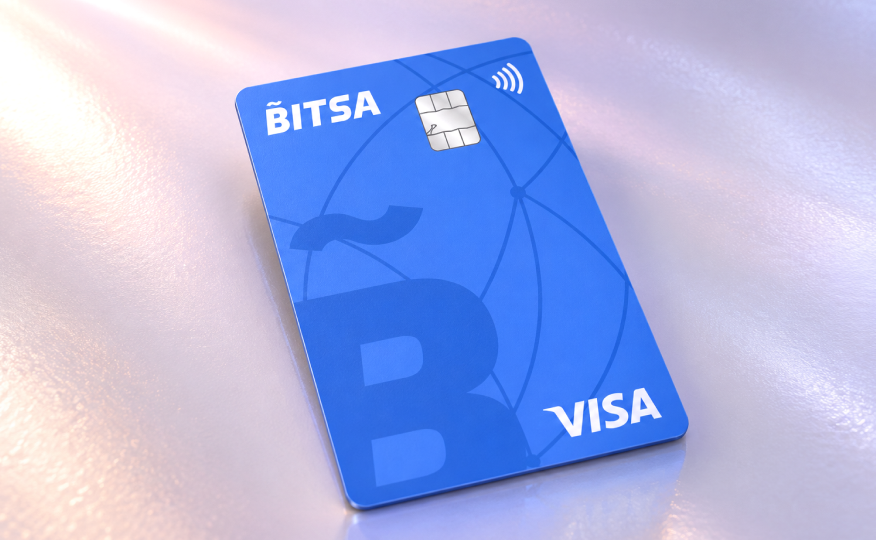
If options 2 and 3 appeal to you most, with Bitsa, you can top up your card with crypto and pay at any merchant that accepts Visa. This lets you use your crypto for everyday purchases without needing the merchant to accept cryptocurrencies directly.
One important detail to keep in mind is that the top-up address changes with every transaction and cannot be reused. When topping up, always check the new address in the app or dashboard for each transaction.
The crypto market in 2026 has shown us some clear winners and even more striking losers. Behind every price movement are factors involving supply, adoption, and regulation that are worth understanding before making any decisions.
Remember: this article is for informational purposes only and is not an investment recommendation. Past performance does not guarantee future results.
FAQ
1. Which cryptocurrency has risen the most in 2026?
Hyperliquid (HYPE) leads the top 100, with a gain of +253.02% between January 1 and September 30, 2026, followed by NEAR Protocol (NEAR) (+221.47%), Zcash (ZEC) (+172.70%), and Uniswap (UNI) (+11.58%). Keep in mind that these figures are as of September 30, 2026, according to CoinGecko.
2. Why do some cryptocurrencies fall by more than 50% in a year?
This is mainly due to massive token unlocks, a loss of interest in a project’s narrative, or a lack of real revenue. Macroeconomic factors also play a role, such as rising bond yields, which can put downward pressure on prices.
3. Is it a good idea to buy the cryptocurrency that has risen the most?
Not necessarily. You could be getting in late, taking on high volatility, and relying on the catalyst behind the price increase (an ETF, a market narrative, or an integration) to remain effective.
4. Where can you check cryptocurrency price movements?
One of the most widely used sources among advanced users is CoinGecko, which provides prices, charts, and historical data. However, it competes directly with the larger platform, CoinMarketCap.
5. Do you have to declare cryptocurrency gains in Spain?
Yes. Gains from selling or exchanging crypto are treated as capital gains and must be declared in your personal income tax return (IRPF), under the savings tax base, with rates of 19%–30%. There is no tax-free threshold. If you hold more than €50,000 on foreign exchanges, you must also file Form 721.