


Anchoring bias: how a price manipulates you without you noticing
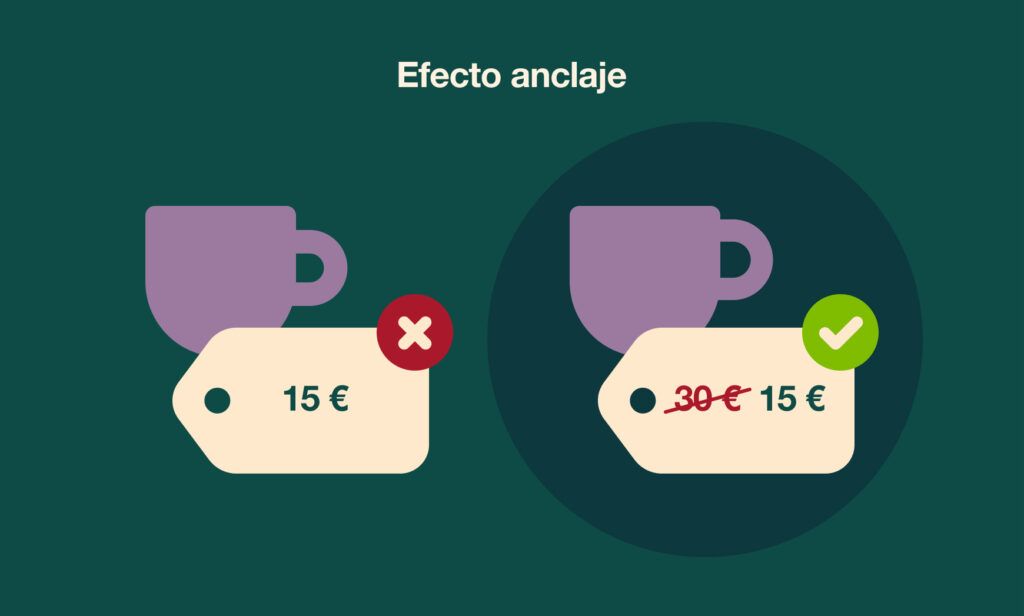
The consumer walks through the store and their eyes stop on a coat: «was €300, now €90». Immediately, a feeling of triumph runs through their mind; the perception of having found a good deal eclipses the fact that €90 is still a figure above their initial budget.
This reaction is not the result of chance or the buyer’s cunning, but rather the outcome of a psychological mechanism. This is anchoring bias, a cognitive tendency that pushes the brain to cling to the first piece of information received and use it as an absolute reference point for subsequent decisions.
This phenomenon is so omnipresent that it acts as the invisible force behind many everyday judgment errors. From underestimating time in project management to rigidity in salary negotiations, anchoring clouds objectivity and makes it difficult to update plans even when data shows the chosen path is irrational.

Being an automatic and unconscious process, this bias not only dictates what people are willing to pay, but also shapes medical diagnoses and business strategies, making it one of the most powerful and silent tools of modern persuasion.
What is anchoring bias?
Anchoring bias or anchor effect is a mental trap that pushes us to over‑rely on the first piece of information we receive when making a decision. Once that piece of data is fixed in our mind, it automatically conditions the interpretation of all subsequent information, distorting our perception of reality.
|
Category |
Key concept |
Description |
| Mechanism | Insufficient adjustment | The brain clings to the first figure received. Even when new data arrives, subsequent judgments remain close to the initial «anchor». |
| Nature of the data | Irrelevance | Anchoring works even if the initial number is arbitrary, absurd or completely unrelated to the technical decision being made. |
| Scientific origin | Tversky and Kahneman | Documented in the 1970s as part of behavioural economics. Explains how heuristics (mental shortcuts) can fail. |
| Type of anchor | External | Reference points provided by third parties, such as the original crossed‑out price on a discount label or the first offer in a negotiation. |
| Internal | References based on personal beliefs, past experiences or one’s own standards. | |
| Risk factors | Uncertainty and stress | The bias intensifies when the individual knows little about the subject, has to decide quickly, or is under emotional pressure. |
| Common consequence | Planning fallacy | Tendency to underestimate times and costs by staying «anchored» to an overly optimistic initial plan, ignoring the reality of the process. |
How is it used against you every time you shop?
Anchoring bias is not an accident; it is a sales tool applied systematically. Here are four specific manifestations that you have surely experienced:

|
Sales strategy |
How the «Anchor» works |
The psychological trick |
| The crossed‑out price | The original price (e.g. «was €200») serves as the initial anchor. | The brain compares the new price (€80) to the anchor. It doesn’t matter if it never cost €200; the perception is of immediate saving. |
| The decoy product | An extremely expensive product strategically placed on the menu or catalogue. | Its function is to make the middle option seem «balanced» and reasonable by comparison, reinterpreting the value of what you buy. |
| Seasonal sales | The «official» price prior to events like Black Friday or Prime Day. | A high reference value is set so that any subsequent discount seems like a once‑in‑a‑lifetime opportunity you cannot miss. |
| Annual vs. monthly subscription | The monthly price (e.g. «€12/month») acts as the first piece of data you process. | When presented with the annual payment (€84), the brain calculates the monthly saving and perceives it as a bargain, even though it involves a larger outlay than planned. |
Why the brain always falls into the same trap
This mechanism, which was an evolutionary advantage in face‑to‑face negotiations, is today a vulnerability exploited by sales algorithms. Here are the psychological reasons for its immense power:
|
Why we fall for it |
How it works |
The real result |
| Lack of references | When you don’t know the value of something, the brain accepts any initial number as a temporary truth. | You pay more simply because the first price you saw was very high. |
| Insufficient adjustment | We try to correct the initial data, but our mind stays stuck very close to the anchor. | Even if you negotiate a discount, the final price still favours the seller. |
| Selective memory | The brain actively seeks reasons to justify that the number received is logical. | You ignore evidence that something is expensive and focus only on the perceived saving. |
| Magnet effect | Even if the number is random (like a dice roll), it conditions your final response. | Your decision‑making ability is altered by completely irrelevant information. |
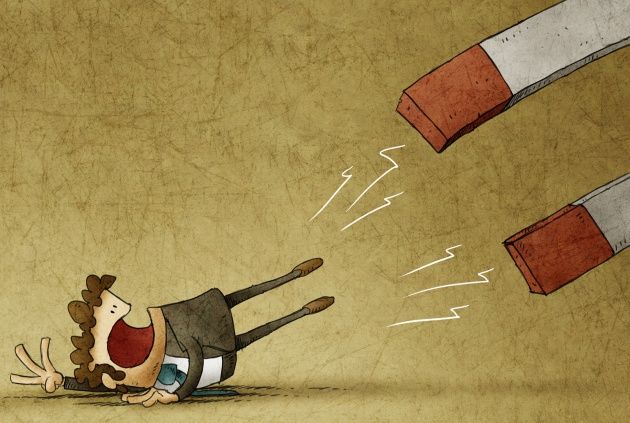
In fact, your mind prefers false data to a total lack of data. Therefore, the first number you hear is not just a figure; it is the magnet that drags all your subsequent logic.
How to prevent a price from deciding for you
Knowing that anchoring bias exists is not enough to disable it, since it operates at a subconscious level. To regain control of your finances, it is necessary to move from theory to practice with habits that impose physical and mental barriers to price manipulation.
|
Strategy |
Action |
Why it works |
| Ignore the crossed‑out price | Evaluate the final price as if it were the only number on the label. Ask yourself: «Would I buy this for this amount if it were not discounted?» | Eliminates the «external anchor» imposed by the seller and forces you to focus on the real value of the product. |
| Generate counter‑arguments | Before buying, find three reasons why that initial price is inadequate or excessive. | Breaks «selective accessibility»; your brain stops seeking confirmation and starts seeing the weak points of the offer. |
| Prior market research | Look up the usual price of the product on different platforms before entering the store or sales event. | Replaces the seller’s anchor with an «internal anchor» based on objective data and real comparisons. |
| Closed budget by category | Set a maximum spending limit before being exposed to the offers. | Creates a logical boundary that prevents a perceived «bargain» from making you spend more than you had initially planned. |
| Use of prepaid cards (Bitsa) | Load onto your Bitsa card only the budget allocated for that specific purchase. | Turns the budget into a physical limit. If the anchored price exceeds your available balance, the purchase simply does not happen, neutralising the power of the bias. |
To conclude, anchoring bias shows that first impressions matter a lot. When you face your next big decision or business negotiation, consider how it could help you turn the tables in your favour.