

Do you shop on Temu, AliExpress, or Shein? Do it without sharing your bank details
E-commerce has transformed consumer habits, allowing access to global platforms with a single click. However, the agility of these quick and impulsive purchases often eclipses a critical aspect: the exposure of financial information. Every time a daily-use card is entered into an international marketplace, a window of access opens to the account where primary assets are managed. To operate with peace of mind on these websites, the most effective strategy is not to cease activity, but to transition toward payment methods that act as a firewall.
What You Give to a Website When You Pay with Your Card
Paying at a digital merchant is not an isolated act of payment authorization; it is a handover of sensitive data. By using a standard bank card, the user links their financial identity to the sales platform. Although European regulations establish strict security protocols and verification processes such as KYC (Know Your Customer) to prevent fraud, the logic of cybersecurity suggests that redundancy is key: the less information shared from the primary payment method, the smaller the attack surface.
Using a free prepaid card allows you to meet payment requirements without exposing your current or savings account number to third parties, keeping essential banking operations safe from any incident in the e-commerce environment.
A Leak Won’t Warn You Before It Arrives
Digital security is not a permanent state, but a constant process. Risk does not reside solely in the user’s intent, but in external factors beyond their control, such as data breaches on third-party servers or undue charges for unwanted subscriptions. According to reports from the National Institute of Cybersecurity (INCIBE), proactive prevention is the best defense against online fraud.
Security incidents rarely issue prior warnings. Therefore, deciding which card to expose when making a transaction is the most relevant decision. Since the buyer cannot control the seller’s security infrastructure, they must focus their efforts on limiting the scope of a potential leak of their payment data.
The Logic of Paying with a Card That Doesn’t Hold Your Money
The fundamental difference between a conventional card and an online prepaid card lies in the source of the balance. While the former is connected to the user’s total liquidity, the latter only has the capital specifically transferred to it for a particular operation.
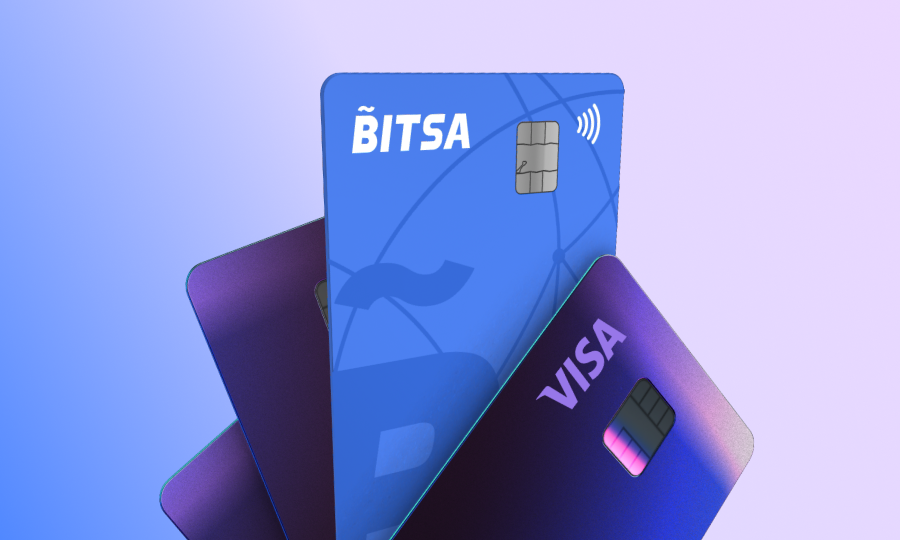
This financial compartmentalization technique turns security into something tangible:
- Limited Balance: Only the exact amount of the purchase is loaded.
- Isolation: There is no direct connection to payroll or savings accounts.
- Exposure Control: In case of misuse, the risk is limited exclusively to the residual balance on the card.
For those seeking an online shopping card with greater versatility, the ability to top up with digital assets is an added value. It is possible to follow the price of Bitcoin or the evolution of Ethereum and convert those gains into an available balance for daily purchases without compromising the traditional banking structure.
Bitsa Works Anywhere Visa Is Accepted
Bitsa integrates naturally into the checkout flow of any marketplace or app that accepts the Visa network. This means the user can keep their online shopping prepaid card linked to their Temu, AliExpress, or Shein accounts without altering their browsing experience.
Compatibility is total, but with an added layer of security. As a solution that does not require a traditional bank account to operate, it allows transactions to be made with the same simplicity as a standard debit card, but under a much more private and controlled management model. To learn more about the regulation of these services, one can consult the European Commission’s directive on payment services (PSD2).
Cancel It, Block It, or Empty It in a Second
The most practical advantage of this system is the post-purchase reaction capability. An independent card grants the user total autonomy: if a purchase on a new website raises any suspicion, the card can be blocked or left with a zero balance instantly from a mobile application.
This flexibility is essential for managing consumer rights in the digital sphere, as detailed by the European Consumer Centre. Being able to dispose of a specific card or reset its credentials without affecting rent payments or basic services is, ultimately, regaining control over one’s own financial identity.

Buying on global low-cost platforms does not have to be a high-risk activity if you have the right tools. The problem does not lie in online consumption, but in the tendency to centralize all financial activity on a single support. A prepaid card like Bitsa facilitates a fragmented and professional management of payments, allowing the user to enjoy the advantages of e-commerce with superior security logic and minimal exposure of their primary assets.