

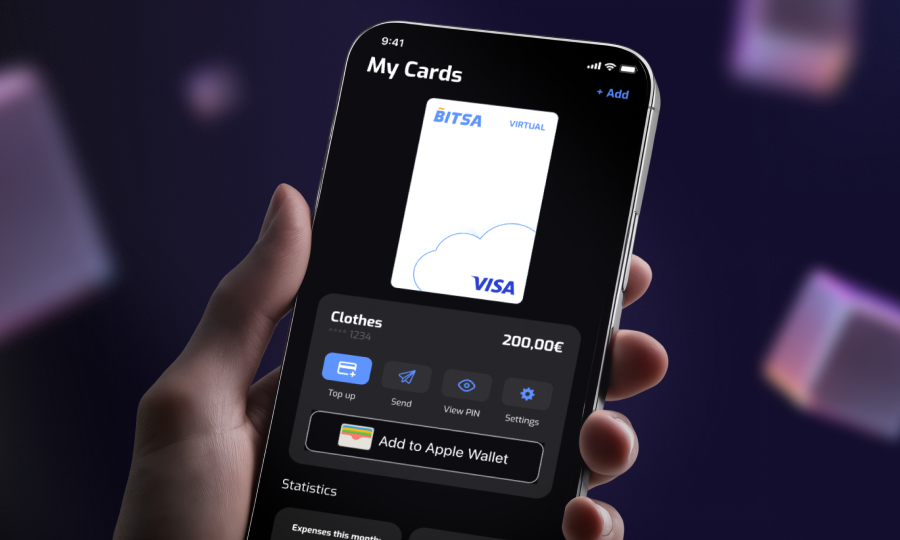
Prepaid card with bitcoin: how it works and pros in 2026
Loading a prepaid card with bitcoin has stopped being an exotic process and become a habitual way to spend crypto in euros without going through a centralised exchange. Operations have matured with MiCA (2024) and payment infrastructure has gained interoperability with Visa and Mastercard, but the process still carries nuances marketing rarely explains well.
This analysis covers how the recharge technically works, what advantages it offers over the traditional exchange-plus-bank-transfer route, what it implies tax-wise, and what alternatives to compare before deciding.
How the recharge technically works
The process has three steps. First, the request: the user tells the issuer’s app how much to load and in which crypto. The app generates a temporary blockchain address, different for each transaction for security reasons, and shows the exchange rate applied before confirming.
Second, the send: the user transfers the amount from their own wallet to the address provided. The issuer waits for the network’s required confirmations, a number that varies by crypto: between 2 and 6 for BTC, a matter of seconds on fast networks like Solana or Polygon.
Third, conversion and credit: once confirmed, the issuer converts the amount to euros at the current rate, with a small spread, and loads it onto the card. From there it works like any Visa card.
One detail worth knowing before operating: sending crypto to a wrong address doesn’t mean automatic loss. Most issuers provide a recovery procedure with a minimum retention on the amount. Never reuse an address from a previous recharge, since each one is single-use.
Real advantages over the traditional route
The traditional route to turn crypto into everyday spending means opening an exchange account, completing KYC, selling the asset, waiting for settlement in euros and requesting a bank transfer. Hours or days can pass between starting and being able to spend the money. A prepaid card with crypto recharge collapses that into a single step from one app.
The euro balance lives at the issuing entity, not a traditional bank. For someone without a bank account, a recent arrival to a country, or someone who prefers not to couple crypto exposure to their main bank, that separation is the underlying advantage: the loaded balance isn’t tied to any current account.
Once loaded, the card spends like any Visa: contactless in-store, online purchases, ATM withdrawal. No merchant needs to “accept bitcoin”; they receive euros from the Visa network without knowing how the card was funded.
By converting to euros at the moment of recharge, the balance stops being exposed to market volatility. For someone who wants to spend crypto without watching the price while buying bread, that separation has concrete value.
Tax implications worth knowing
This is the point marketing for these cards rarely mentions: recharging a prepaid card with cryptocurrency is a taxable event in most jurisdictions. Converting crypto to euros, even to spend them in euros afterwards, constitutes a disposal: the digital asset is transferred and fiat is received.
The result, a capital gain or loss, is calculated as the difference between the crypto’s acquisition value and its disposal value, meaning the euros that land on the card net of the spread. Each recharge is a separate operation that needs documenting: crypto amount, date, exchange rate applied, euros received.
Since 2026, the EU’s DAC8 directive expands automatic tax information exchange on crypto-assets between member states. This information doesn’t constitute personalised tax advice; for specific situations, consulting a tax advisor is worthwhile.
Limits and nuances worth knowing
The exchange rate the issuer applies includes a margin over market price, usually between 1% and 3% depending on the crypto and volatility at the time. It isn’t a hidden fee if it appears in the app before confirming, but it’s worth factoring in when comparing.
With slow-network cryptocurrencies, minutes can pass between sending and confirmation. If the market moves in that window, the applied rate can differ from what was seen when starting the operation. On fast networks this risk is marginal.
Each recharge is a disposal with potential capital gain. Recharging many times a month multiplies the operations to document and potentially declare. Grouping recharges into larger amounts reduces that administrative load.
The euro balance depends on the issuer’s solvency and regulatory framework. An electronic money institution authorised by a national supervisor is subject to fund segregation and continuous oversight, but not every crypto prepaid card on the market operates under that framework.
Prepaid card with bitcoin against other alternatives
The centralised exchange plus bank transfer route gives full control over the exact moment of conversion, useful for planning tax timing, and suits those who already keep accounting from the exchange itself. In exchange, it requires an additional account and KYC, and adds time, spread and withdrawal fees.
Direct crypto cards from exchanges like Crypto.com or Binance work differently: the crypto balance stays at the exchange and each purchase converts it at payment time. They’re more flexible because there’s no need to plan how much to load, but they carry a serious tax disadvantage: every purchase is a disposal. Buying a coffee with crypto generates an operation to declare; more purchases mean more administrative load.
A prepaid card with crypto recharge fits when operational simplicity in one step is the priority, no additional bank account is needed, and one is willing to group recharges into moderate amounts rather than convert crypto on every purchase.
How to get and load your card
The process with fintech issuers is quick and doesn’t require an existing bank account. A good starting point is the free virtual prepaid card, available before requesting the physical one.
- Download the issuer’s app (iOS or Android) and register with email and phone.
- Complete KYC verification with passport or national ID. General requirement: be of legal age.
- Request the card. The virtual is issued in seconds and free to start with; the physical one is requested afterwards from the same app.
- Recharge from your own wallet with the crypto the issuer supports.
- Spend at any Visa merchant, in-store or online, or withdraw at an ATM.
For merchants where a crypto card is accepted directly, the euro balance loaded works the same as anywhere else: the Visa network processes the payment without distinguishing the funds’ origin.
Anyone comparing options should check the current fee and supported-currency list on the issuer’s prepaid visa card page before committing, since terms change with some frequency.
Frequently asked questions about the prepaid card with bitcoin
Can I pay directly in bitcoin with a prepaid card that recharges from crypto?
No. The operation happens in two phases: first the card is recharged with crypto, which converts to euros at that moment, then payment happens in euros like any Visa card. The merchant never receives crypto.
Does recharging get taxed even if I don’t spend the balance afterwards?
Yes. The taxable event is the crypto-to-euros conversion, not the later spending. The moment crypto leaves the wallet and euros land on the card, a disposal occurs that needs reflecting in tax filings.
What happens if I send crypto to the wrong address when recharging?
The blockchain transaction is irreversible, but most issuers offer a recovery procedure with a minimum retention on the amount, not an automatic loss. Always copying the address from the app at the moment avoids the error, since each recharge generates a new one.
Which cryptocurrencies can be used to recharge?
Depends on the issuer. The most common accept BTC, ETH, USDT and other cryptocurrencies listed in the app, a list that can expand over time.
Is it cheaper to recharge with crypto or sell on an exchange and transfer to the bank?
Depends on the amount. For small, occasional sums, a prepaid card with crypto recharge is usually simpler and comparable in cost. For large amounts, exchange plus bank transfer can have a smaller spread but adds withdrawal fees that need factoring in before comparing.