

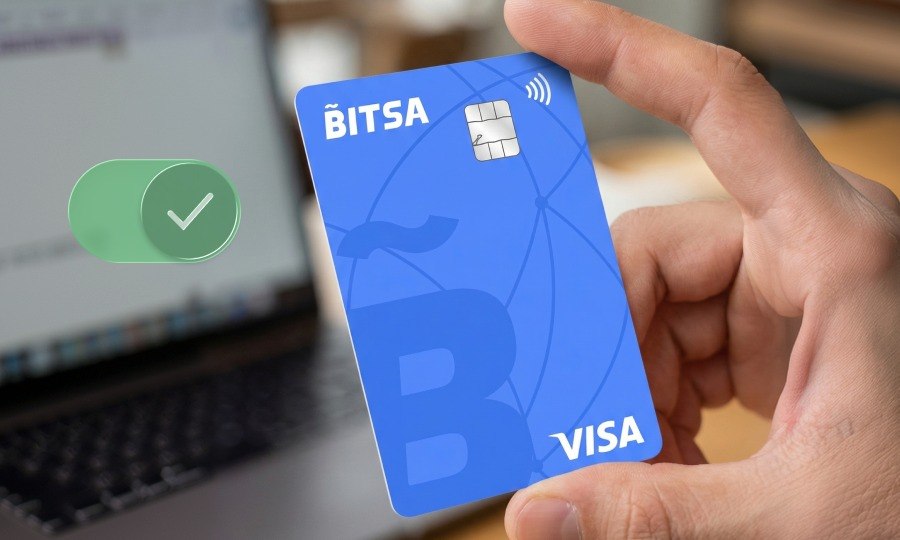
Situations where a wallet card saves you trouble
There are moments when using your regular bank card is not the best idea. And others when you cannot use it at all. A wallet card solves several of these cases without needing to open an account or ask anything from your bank. You just load balance, pay, and control your spending in real time.
Let’s start with the basics: what are these cards, what are they for, and why would you use one instead of your regular bank card?
What is a wallet card?
A wallet card is a prepaid card that works exclusively with previously loaded balance. Think of it as a digital wallet: you can only spend what you have put inside.
One of its advantages is that it is not linked to a bank account or a credit line. This means there is no risk of overdraft, no debt generation, and no unexpected expense affecting your finances beyond the available balance.
Although it may seem like a new concept, this has been around for years. It is regulated as electronic money under the Electronic Money Act 21/2011, of July 26. This law defines the legal framework for electronic money institutions in Europe.
Now, this type of card exists in two formats:
-
Physical: to pay in stores and withdraw cash at ATMs.
-
Virtual: ideal for online payments.
Its operation is quite simple. You load the balance you need, pay with the card, and when the balance runs out, no debt is generated. In addition, you can check all transactions in real time from the issuer’s app. It’s almost like a prepaid mobile phone, but for money.
Online shopping where you do not want to leave your bank details
Online shopping is wonderful, we will not deny that, but there are situations where we feel uneasy or distrustful about leaving our bank details. Buying from a website you do not know, from a foreign store, or making a one-off purchase on a new platform always involves some risk.
If you enter your main bank card details and that website suffers a security breach or gets hacked, your information is exposed. This is not the first time this has happened.
With a wallet card, the risk is much lower. If someone accesses the data, they can only use the balance you have loaded at that moment, not your entire credit line or bank account balance.
This is the key difference compared to a traditional credit card: the wallet card does not expose your entire assets, only what you have decided to load.
Subscriptions you want to control without surprises
It is not only useful for security, it is also ideal if you lose track of a subscription. Recurring subscriptions are convenient, but sometimes they come as a surprise along with price increases, extra charges, or automatic renewals that slip past you.
In this case, there can be no surprises because they can only charge the amount you have loaded. If the price goes up or they try to charge you something extra, the payment will not go through if there is not enough balance.
It is also useful for free trials that require a card. If you forget to cancel before the trial period ends, the card with no balance acts as a natural brake. You will pay when you want to.
Travel where you prefer not to take your main card
Traveling with your main bank card is also risky. Many people lose it, have it stolen, or even have their data cloned at ATMs. Since you will have loaded just enough for your trip on your wallet card, if you lose it or it is stolen, you will not lose everything you had in your bank account. In addition, you can block it immediately from the app, without having to wait for a repetitive bot to transfer you to an agent.
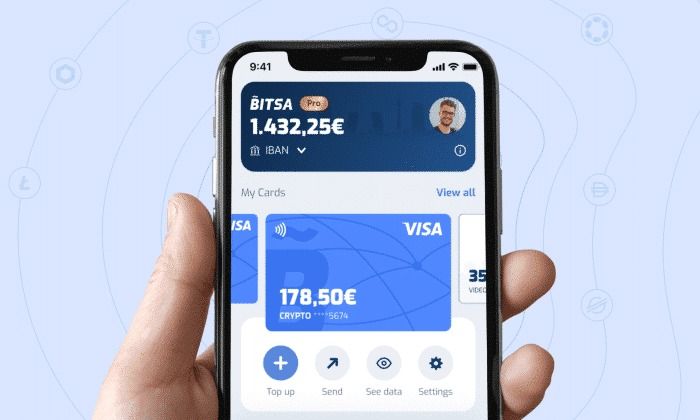
This is where Bitsa comes in. It is a very practical option because it is a Visa card, meaning it is accepted by most merchants. In addition, you can block the card immediately from the app and manage everything from your mobile. Not to mention that you can recharge it from anywhere either with cards, SEPA transfers or even with cryptocurrencies.
Managing another person’s expenses without sharing your account
The problems with traditional cards are not always about us. Sometimes they involve our environment. Surely you have considered giving money to a close family member, whether your child, parent, or cousin. The thing is, the idea of giving someone access to your bank account is not that attractive. But what if I tell you that you can give them access to a card where you decide how much money they can spend? In addition, you can control their transactions in real time and set limits or block it whenever you want.
The difference with a traditional bank debit card is clear: that one is directly linked to your account and any expense comes out of your bank balance. With the wallet card, the risk is limited to the balance you have loaded. Easy and simple.
When you do not have a bank account or do not want to open one
This type of card is also ideal when you do not have a bank account or do not want to open one. It is more common than you think. There are people who have recently arrived in the country, others who do not meet the requirements of traditional banks, or simply people who do not want to open an account to make occasional payments.
Wallet cards allow you to operate without a bank account. You only need the issuer’s app, complete identity verification (KYC) and a way to load balance.
Bitsa is an example of this flexibility because it allows reloading with cryptocurrencies, transfer, or card, without requiring a previous bank account. In fact, you can even recharge with cash if you buy vouchers in stores such as FNAC, Carrefour, or El Corte Inglés.
Wallet card vs. debit and credit: when each one makes sense
It is not about replacing your bank card, but knowing when each one is convenient. They all have their pros and cons, and that does not make one worse than the other, it is simply that each one is more useful than the other in certain situations:
What a wallet card does not do
Now, not everything is advantages. This type of card has some limitations. Keep in mind that a wallet card is not a complete bank account. It has limitations you should know:
-
You cannot set up direct debits or receive salary payments
-
It does not generate credit history
-
It has reloaded limits and balance caps depending on the issuer
-
Some merchants do not accept prepaid (car rentals, certain hotels)
-
It may have fees for issuance, maintenance, or inactivity
That is why it is important to review the conditions of each provider before contracting it.
A wallet card does not replace your bank card, but there are situations where using it is the most practical option. You can buy where you do not want to expose your data, travel with it, apply it to third-party expenses, or simply not depend on a bank to pay.
Bitsa Card works in all those situations. It is a prepaid Visa card, you can recharge it with crypto or transfer, you can manage it completely from the app, and you can even have multiple cards linked to your account. It is undoubtedly a very good option if you want to have a wallet card.
FAQ
What exactly is a wallet card?
A wallet card is a prepaid card that works exclusively with previously loaded balance. It is not linked to a bank account or a credit line, so you can only spend the money you have loaded.
Is it safe for online shopping?
Yes. By not being linked to your main bank account, you reduce the risk. If someone accesses the data, they can only use the available balance at that moment.
Does it work for traveling abroad?
Yes. It is a good option for travel because you can load only what is necessary. If you lose it or it is stolen, the risk is limited and you can block it instantly from the app.
Can I give it to another person to use?
Yes. Many people use wallet cards to manage family expenses without sharing their main bank account. You can control transactions and set limits.
Do I need to have a bank account to get one?
No. Wallet cards allow you to operate without a bank account. You only need to complete identity verification (KYC) and a way to load balance.
Can I set up direct debits or receive salary payments?
No. A wallet card is not a complete bank account. It does not allow direct debits or receiving income such as a salary.
Does it generate credit history?
No. As it is not a credit line, its use does not affect or build your credit history.