

How to pay at a casino without a bank account
The use of online entertainment platforms has grown exponentially, and with it, the need to manage deposits efficiently. For many users, the choice of payment method is not just a matter of convenience, but a strategic decision on how to organize their personal finances. The current trend does not focus on the act of paying itself, but on the medium used to do so, seeking alternatives that decouple these activities from primary day-to-day financial operations.
Every payment is recorded in your bank history
When a traditional bank card is used to make a deposit on a gaming platform, the transaction is permanently recorded on the current account statement. For many users, this represents a logistical inconvenience: leisure expenses end up mixed with household bills, payroll deposits, or supermarket purchases.
This lack of segmentation makes it difficult to maintain clear visibility of the budget allocated to entertainment. By not separating cash flows, it becomes more complex to audit how much is being spent on a specific activity. Consequently, there is a growing demand for methods that allow this type of usage to remain separate from the main bank account—not to hide the activity, but to maintain rigorous financial order and a clear spending structure.

Data shared with casinos is not always secure
When making a payment with a conventional debit or credit card, the user does not just authorize a transaction; they share sensitive data linked to their primary assets. Although gaming platforms in Spain are subject to strict supervision by the Directorate General for the Regulation of Gambling (DGOJ)—which requires identity verification processes and KYC (Know Your Customer) protocols—the technical risk of data exposure always exists in the digital environment.
Financial prudence dictates that the less information shared from one’s regular payment method, the smaller the risk surface in the event of external security breaches. Using an independent card for these purposes provides an extra layer of control, limiting the exposure of the user’s primary banking infrastructure. Institutions such as the National Cybersecurity Institute (INCIBE) regularly recommend the use of specific payment methods for online transactions as a preventive measure.
What you play stays between you and your prepaid card
The adoption of a prepaid card emerges as the technical solution to issues regarding transaction history and exposure. These tools allow users to operate with a segregated balance, funded only with the exact amount they intend to use. Since there is no direct connection to the main bank account, the user ensures that any incident on the gaming platform does not affect the rest of their finances.

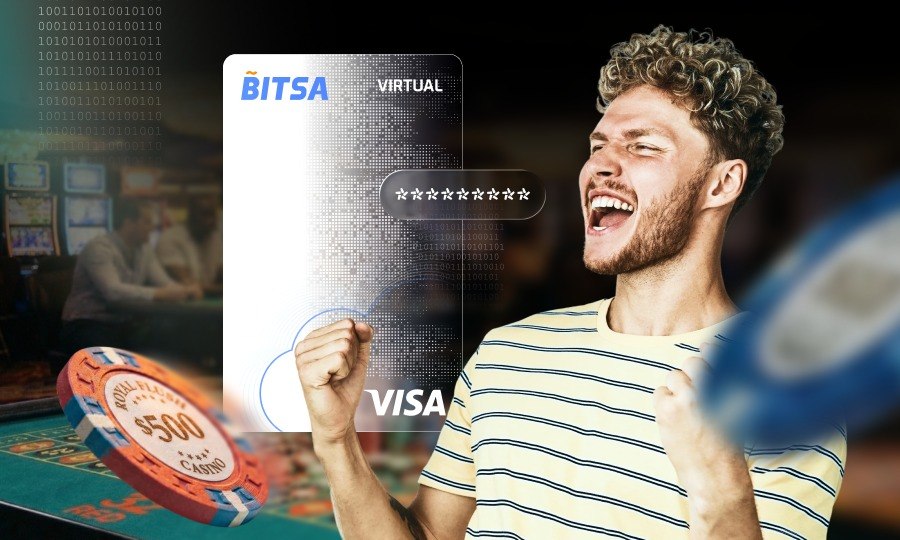
Bitsa is an example of how a prepaid card can facilitate this management. As an independent Visa card, it allows for deposits with the same ease as a bank card but with the advantage of being a self-contained compartment. Additionally, it offers the flexibility of being recharged through various methods; users can track the price of Bitcoin and choose to load their card using these assets when they see fit. This versatility allows the user to decide at any time how and when to buy cryptocurrencies to fund their leisure balance, keeping operations under total control and centralized within a single tool.
For many people, making a payment on an entertainment platform is not just about completing a deposit, but about deciding what level of exposure and organization they want to maintain. Using a traditional bank account for these purposes often generates unnecessary “noise” in the financial history and avoidable exposure of sensitive data. A prepaid card like Bitsa professionalizes this management, separating recreational use from the rest of the domestic economy, limiting the balance available for gaming, and ensuring that control over the transaction remains entirely in the hands of the holder.
For more information on the security of digital transactions in Europe, you may consult the official European Union portal on payment services.