


Vitalik Buterin: Who Is the Creator of Ethereum and What He’s Building Today
Imagine a 19-year-old teenager writing a technical document that a few years later would become the foundation of the world’s second most important blockchain. It sounds like a movie, but that’s exactly what happened with Vitalik Buterin and Ethereum.
It’s impossible that you haven’t heard his name at least once in any conversation about cryptocurrencies. Vitalik doesn’t run a company, doesn’t make decisions on his own, and yet remains one of the most influential voices in the ecosystem.
In this article, we’ll look at who he is, how he came to create Ethereum, what he has advocated for beyond the code, and what he’s working on now.
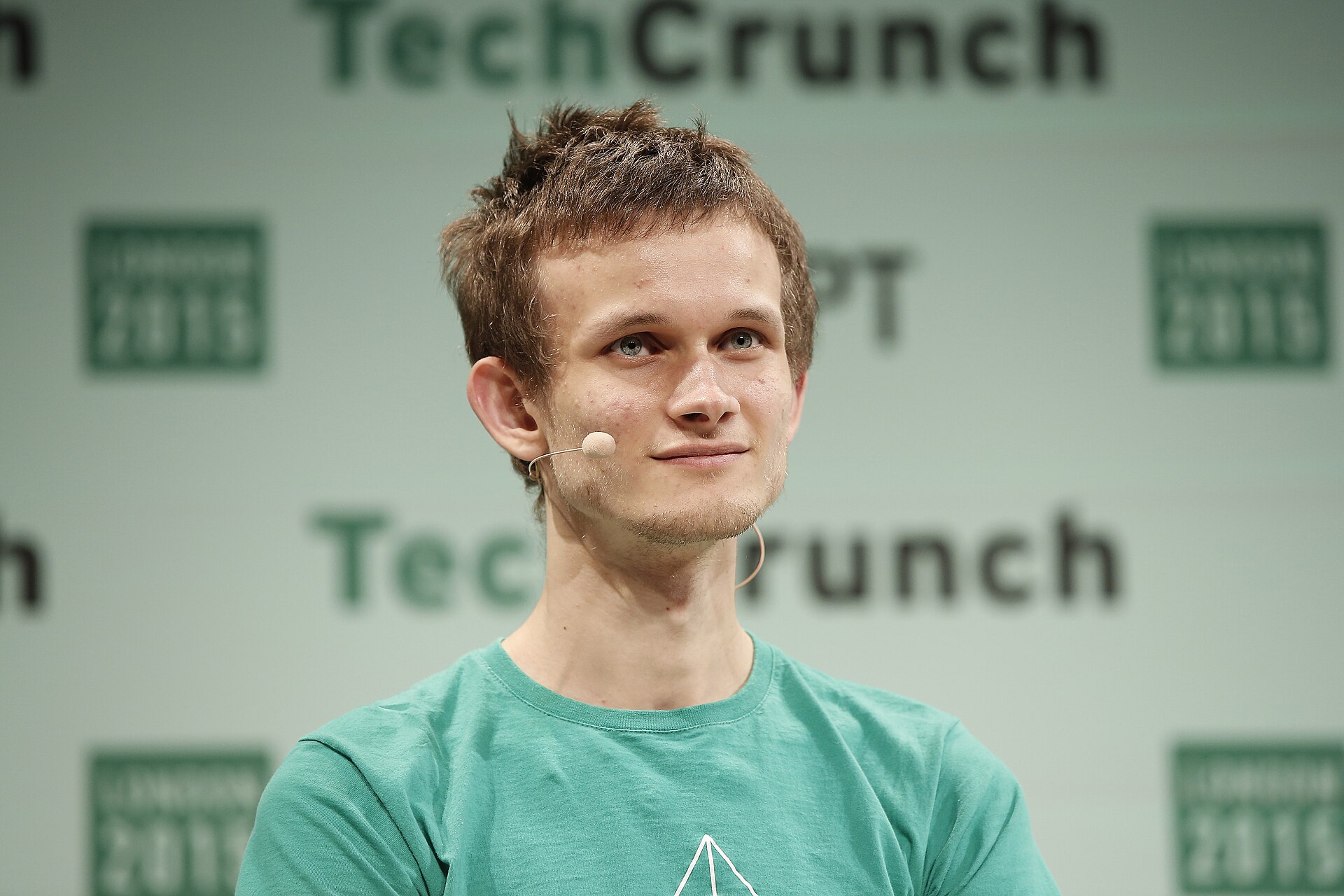
From Math Prodigy to Ethereum Co-founder
Let’s start from the beginning. Vitalik Buterin was born on January 31, 1994, in Kolomna, Russia, and moved with his family to Canada at the age of six. From an early age, he showed a remarkable talent for mathematics and programming, and as a teenager he began participating in computer science olympiads.
His first contact with cryptocurrencies came in 2011, when his father told him about Bitcoin for the first time. Vitalik didn’t just start buying bitcoin — he wrote articles about the technology and co-founded Bitcoin Magazine, being only 18 years old when the first article was published.
Over time, he started traveling to conferences and meeting developers from around the world. During those trips, he realized that Bitcoin had limitations because it was designed primarily for payments, not for running complex programs on the blockchain. That idea is what led him to develop Ethereum.

The Idea That Made Ethereum Possible
In late 2013, Vitalik was 19 years old when he published the Ethereum whitepaper. His proposal was fundamentally simple but highly revolutionary. He wanted to launch a programmable blockchain capable of executing smart contracts.
He didn’t just limit it to recording transfers of a currency. Ethereum would allow anyone to deploy decentralized applications (dApps) that run exactly as programmed, without intermediaries.
Buterin publicly presented the project in January 2014 at the North American Bitcoin Conference in Miami. There, he managed to gather a group of people who would be responsible for taking Ethereum forward.
How the Project Was Funded and Who the Other Co-founders Were
It’s important to note that Ethereum didn’t start with a company behind it, but as an open-source project funded by the community. In 2014, a public token presale was launched, raising about $18 million in bitcoin — a very significant figure for the time. Keep in mind that the idea of digital money was still being accepted.
Although Buterin is the most visible face, Ethereum had eight official co-founders. The initial five, in December 2013, were Vitalik Buterin, Anthony Di Iorio, Charles Hoskinson, Mihai Alisie, and Amir Chetrit. In early 2014, Joseph Lubin, Gavin Wood, and Jeffrey Wilcke joined.

Key Ideas Behind Ethereum’s Foundation
Of course, each founder brought something to the table, and that’s why they were so valuable to the project:
- Gavin Wood wrote the Yellow Paper (Ethereum’s technical specification) and created the Solidity programming language.
- Joseph Lubin later founded ConsenSys, one of the largest Ethereum infrastructure companies (MetaMask, Infura, etc.).
- Charles Hoskinson would go on to found Cardano.
- Anthony Di Iorio funded part of the initial development and organized local Bitcoin communities.
The network went live on July 30, 2015, with the Ethereum genesis block.
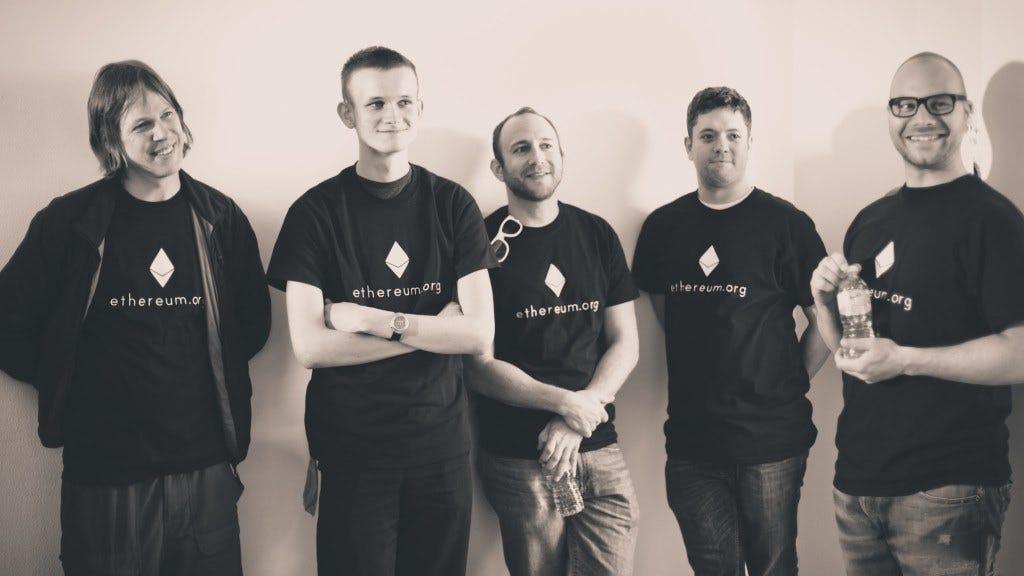
Key Moments for Ethereum Under His Leadership
Since 2015, Ethereum has gone through several milestones in which Buterin has played a central role as technical driver and spokesperson. It would be a crime to talk about him and skip these milestones, so here they are:
- Network launch (2015): Ethereum starts operating with its virtual machine (EVM) and its first smart contracts.
- The DAO hack (2016): A flaw in a decentralized fund leads the community to debate whether to reverse transactions. A hard fork results in Ethereum (ETH) and Ethereum Classic (ETC). Buterin supported the version that reversed the hack — a controversial but decisive move.
- DeFi and NFT expansion (2020-2021): Ethereum becomes the foundation for major decentralized finance applications and the NFT boom.
- The Merge (2022): Ethereum abandons mining (Proof of Work) and moves to a Proof of Stake consensus model. This significantly reduces its energy consumption. Buterin had been advocating for this change for years as part of the original roadmap.
- Pectra (2025): The latest major upgrade, combining scalability and usability improvements (such as the EIP-7702 proposal to improve account experience) with adjustments in ETH deposit management.
- Fusaka (December 2025): This upgrade continues the trend of optimizing the execution layer and node efficiency, within the vision of a lighter, more private, and more resilient project long-term.
It’s worth noting that in each of these moments, his role has not been that of a “boss,” but rather that of a researcher, coordinator, and technical voice within a community governance process.

What Buterin Advocates Beyond the Code
Now, this isn’t the first time we need to separate the person from the project. Buterin doesn’t just talk about technology. In his writings and conferences, he defends ideas that go beyond Ethereum’s code:
- Decentralization and censorship resistance: He insists that Ethereum must remain an open infrastructure, difficult to control by governments or large corporations.
- Privacy: In 2025, he elevated privacy to “maximum priority” for Ethereum and drove research to allow users to interact with less data exposure.
- Philanthropy: He has donated large amounts of ETH to social and research causes. In 2025, for example, he moved $500,000 in ETH and USDC to his charitable organization, Kanro, to coordinate his donations more transparently.
- Minimal governance: He argues that Ethereum’s governance should be limited to the essentials, letting the ecosystem organize itself in a decentralized way, without an “Ethereum company” making all the decisions.
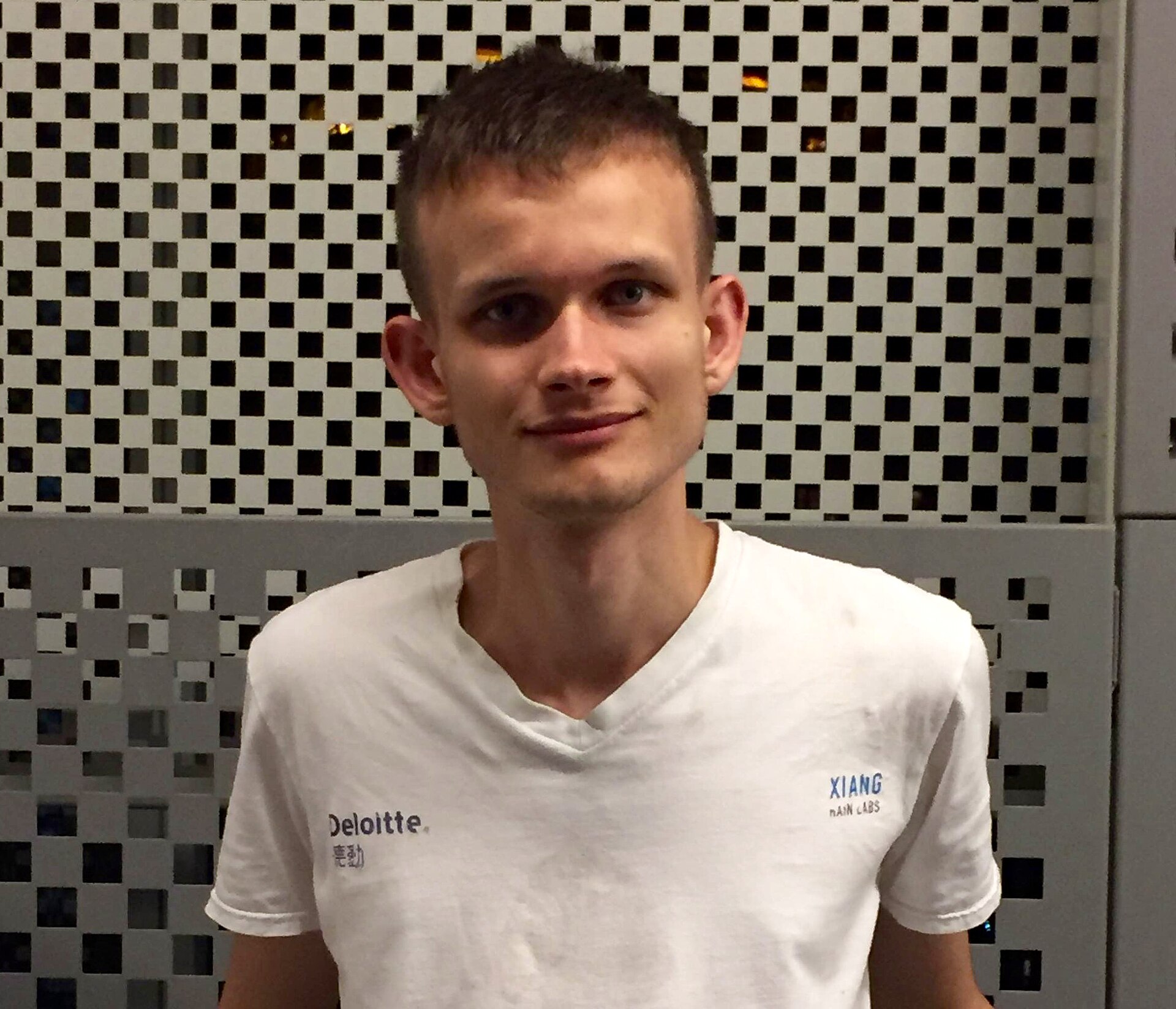
What He’s Working On Now
Vitalik Buterin remains active today, but his role has evolved. He’s no longer involved in day-to-day development, but rather in research and defining Ethereum’s long-term technical direction. His key areas of work include:
- Lean Ethereum: This is a multi-year plan to rebuild nearly all key pieces of the protocol, with improvements in cryptography, privacy, and quantum resistance. Buterin has described it as the largest reconstruction of Ethereum since The Merge.
- Execution layer improvements: He proposes changes such as moving from the current virtual machine (EVM) to RISC-V and restructuring the state tree to make the network more efficient and prepared for zero-knowledge proofs (ZK).
- Self-sovereignty and privacy: In 2026, he has set the goal of regaining ground in self-sovereignty, making it easier for anyone to run full nodes, protect their data, and depend less on intermediaries.
Additionally, he continues to publish reflections on AI, decentralized social networks, and the role of Ethereum as internet infrastructure, rather than just a financial platform.

Frequently Asked Questions About Vitalik Buterin
How old is Vitalik Buterin? He was born on January 31, 1994, so he is 32 years old in 2026.
How much money does Vitalik Buterin have? His actual net worth is difficult to estimate because most of it is in ETH, and he himself has donated large amounts. He was estimated to have surpassed one billion dollars in 2021, although figures fluctuate significantly with the token’s price.
Is Vitalik Buterin the CEO of Ethereum? No. Ethereum doesn’t have a CEO or central company because it is a decentralized network. Buterin is a co-founder and a highly influential technical voice, but decisions are made by community consensus.
Is he still actively coding? He writes code and contributes to technical specifications, but his primary role today is research and conceptual direction, not daily development.
Where does he live? He doesn’t have a fixed residence. He has said in interviews that he lives out of a suitcase and travels constantly between conferences and crypto communities.
Vitalik Buterin doesn’t fit the mold of the tech entrepreneur you see in other sectors. He doesn’t own a company, isn’t looking to go public, and Ethereum’s most important decisions aren’t made by him alone. Understanding how his role works also helps understand how Ethereum itself works. It’s an open-source project sustained by a broad community, not by a single figure. If you’d like to buy Ethereum, you can do so easily and securely from the Bitsa app, in just 3 minutes.
Remember that this article is intended for informational purposes and is in no way investment advice. Do your own research and inform yourself about the risks of any project you get involved in.