


Sunk cost fallacy: why you keep paying for things you do not use
There is a scene that repeats itself every month in thousands of households. You open your banking app, look at the statement and there is a charge you do not recognise at first. You look closer and realise it is the gym. The one you have not been to since January. It may not be just the gym: perhaps you are also being charged for a streaming platform you subscribed to for a specific series and never cancelled, or an insurance policy you have been paying for years without knowing exactly what it covers.
This is not an isolated case. Behind a good part of that money there is a very specific psychological bias: the sunk cost fallacy.
What is the sunk cost fallacy
In economic psychology, a sunk cost is any investment of money, time or effort that has already been made and cannot be recovered. The “fallacy” appears when we let that past expense influence present decisions.
The typical reasoning is: “I have already paid 300 euros for laser this year, I cannot stop now, even though you are not seeing any results.” Or “I paid 200 euros for this course, I have to finish it even if it is not useful to me.” The problem is that those 300 or 200 euros no longer exist. They are gone. They will not come back no matter how many more laser sessions you attend or whether you finish the course.
According to classical economic theory, rational decisions should be based only on future costs and benefits, not on what we have already spent. But human beings are not rational machines. We find it hard to let go of what we have already invested, even if continuing costs us more.

Expenses you keep just because you started paying them
Think about the recurring charges you currently have on your account. I would bet anything that at least one of them fits here:
-
Streaming subscriptions you watch twice a month but pay for every week
-
Fitness or meditation apps you used during the first week and then forgot
-
Insurance policies you took out years ago and have never checked whether they are still needed
-
Software platforms you used for a one-off project and never cancelled
-
Memberships or clubs that promised advantages and ended up not being useful at all
Everybody knows that each of these expenses is small in isolation. Some may be 10 euros per month, 15, perhaps 20. But these forgotten or underused subscriptions will probably add up to hundreds of euros by the end of the year. The most serious part is that you have likely been paying for all of them for more than a year.
The effect of automatic renewal
Then we also have the effect of automatic renewal, a factor that makes it even harder to get rid of these subscriptions. Most digital subscriptions renew themselves. You do not need to make an active decision to keep paying; you only need to not take the active decision to cancel.
That turns inertia into an invisible fixed expense. It does not hurt because you do not feel it as a decision. It simply happens, month after month, until one day you look at your statement and realise you have been paying for a year for something you have not used for the last six months.
The National Commission on Markets and Competition (CNMC) has repeatedly warned about automatic renewal practices and the difficulty of cancellation in some digital services, but as long as companies are allowed to do it, they will continue to take advantage of the fact that you are not paying close attention to these payments.

How to tell a worthwhile expense from one that is not
We know that it is sometimes hard to let go of those subscriptions or payments because you think you might regret it later. To remove that uncertainty, you should ask yourself: “If I were not paying for this today, would I sign up for it again?”
If the answer is no, the expense has stopped making sense. It does not matter whether you have been paying for six months or three years. The sunk cost has already happened. The decision is about what comes next, not about what has already been.
Another way to look at it is to imagine that someone gives you back the money you have paid so far. Would you still pay for it this month? If the answer is still no, then it is clearly time to stop.

Why it is so hard to cancel
Although many times the answer to why you do not cancel seems to be “laziness”, I have to say it is more complicated than that. In these cases there is a clear emotional component: cancelling feels like admitting you were wrong to sign up. And nobody likes to admit they were wrong, especially with their own money.
If we go deeper into psychology, there is also a loss aversion effect: we prefer not to lose what we have invested even if keeping it costs us more in the long term. It is irrational, but it is human. Psychologists Daniel Kahneman and Amos Tversky showed that people feel the pain of a loss twice as intensely as the pleasure of an equivalent gain.
Clearly, the services themselves know this. That is why they make cancellation difficult with hidden buttons, long forms, telephone calls with retention scripts and last-minute offers. They also remind you how long you have been with them, how special you are, how much you will miss out on if you leave. All of that is designed so that you do not cancel. And it obviously works.

How to really clean up expenses you do not use
Getting rid of all these expenses you no longer use is quite simple; it just requires discipline. Here are some steps to follow if you are already sure you do not want to continue with unnecessary expenses:
-
Review bank statements from the last quarter. Not just the last month, because some charges are quarterly or half-yearly.
-
Make a list of all the recurring charges you find.
-
For each one, apply the question: would I sign up for it today?
-
Those that do not pass that filter, cancel them that same day. Not “next month”. Not “when the period ends”. The cost of postponing it is another month paying for something you do not use.
You may be surprised by how many expenses you find that do not make sense. And you may be even more surprised by how much free money you have each month once you eliminate them.
Every expense you keep out of inertia is money you could be using on something that actually gives you value. The first step is to identify the sunk cost fallacy in your own finances. The second, as you already know, is to open your bank statement and start cancelling.
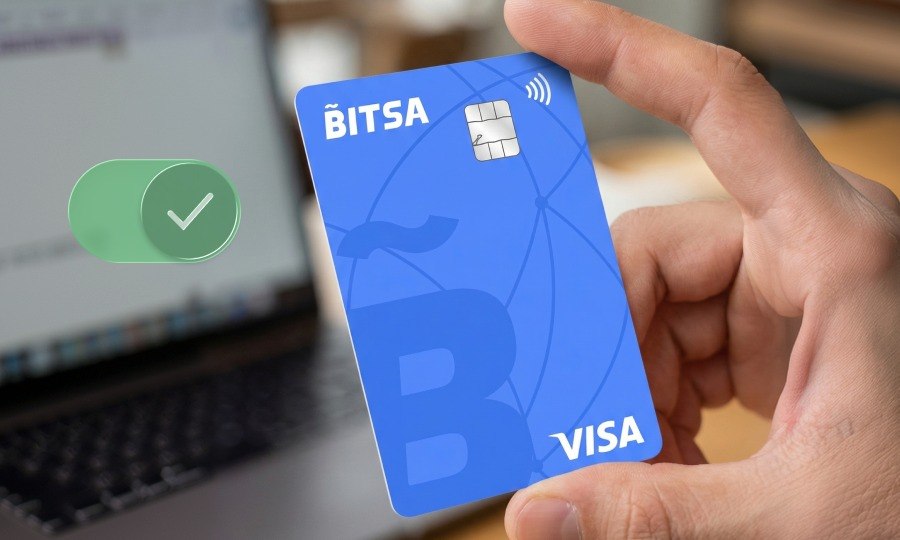
One important note is that for those subscriptions you are not sure you want to keep, a prepaid card can help a lot. Bitsa is a very good option, but that is another topic. If you are interested, we explain everything here.
FAQs
What is the sunk cost fallacy?
It is a psychological bias that leads us to make decisions based on what we have already spent (money, time or effort) instead of evaluating future costs and benefits. The mistake is thinking that, because we have already invested something, we must continue even if it is no longer good for us.
What types of expenses usually fall into this fallacy?
The most common ones are: streaming subscriptions that are barely used, fitness or meditation apps abandoned after the first week, old insurance policies never reviewed, software platforms for one-off projects that were never cancelled, and memberships or clubs that do not provide real benefits.
How do I know if an expense is still worth it or not?
Ask yourself: “If today I were not paying for this, would I sign up for it again?” If the answer is no, the expense has stopped making sense. You can also imagine that someone refunds you what you have paid so far: would you still pay this month? If not, the answer is clear.
What role does automatic renewal play in this problem?
Automatic renewal means you do not have to make an active decision to keep paying; it is enough not to cancel. This turns inertia into a fixed, invisible expense that you do not feel as a decision. It simply happens month after month until you review your statement and discover you have been paying for something you do not use.
How can I clean up expenses I do not use?
Follow these steps: (1) Review bank statements from the last quarter, not just the last month. (2) Make a list of all recurring charges. (3) For each one, ask: would I sign up for it today? (4) Those that do not pass that filter, cancel them that same day, not “next month”.
What tool can help control doubtful subscriptions?
A prepaid card such as Bitsa can be useful for subscriptions you are not sure you want to keep. By loading only the necessary amount, you have more control over what you pay and avoid automatic renewals taking you by surprise.