

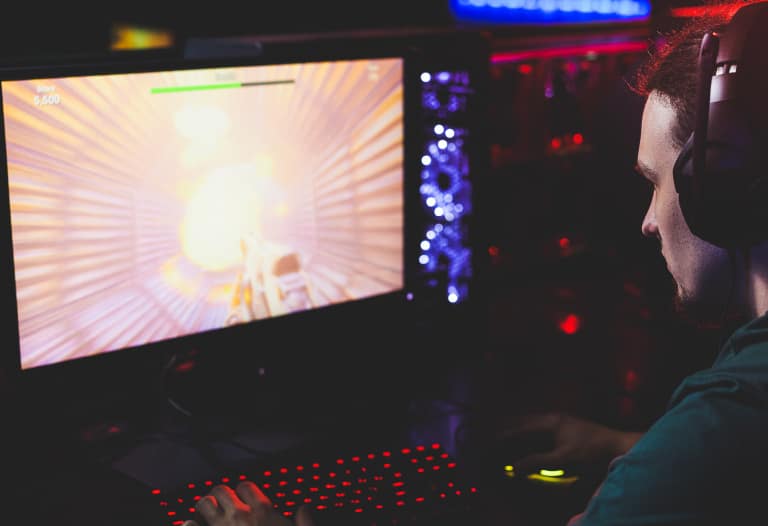
How to make money playing video games: real options in 2026
The European gaming industry generated over 25 billion euros in 2024 according to industry data. A small but real portion of that money reaches players themselves, not just the companies that develop and distribute the games. The question isn’t whether you can make money from gaming, but how to do it with legitimate options and without falling for promises that don’t hold up.
This article covers the real paths that work today, revisits what remains of the play-to-earn boom, explains the legal and tax aspects worth keeping in mind, and how to manage any income you generate.
What making money from gaming actually means
There are two ways to read the question.
The first is as a supplementary income source, dedicating a few hours a week and expecting modest compensation. Selling skins, occasionally entering tournaments, or doing occasional testing all fit here.
The second is as a professional activity, with the intention of turning gaming into the primary source of income. This is where professional streaming, competitive esports, and specialised content creation belong. It requires dedication, consistency, and, almost always, time before generating significant income.
Neither is easy. As in any other industry, most people who try don’t reach the financial goal they were chasing.
Legitimate ways to make money from video games
These are the paths that exist today and that have proven real for years, with their limitations.
Streaming and content creation. Twitch, YouTube Gaming, and Kick are the main platforms. Income comes from subscriptions, donations, advertising, brand collaborations, and merchandise sales. It requires consistency, a distinctive personality, and hours of broadcasting. Direct monetisation activates once you meet specific platform requirements (for example, Twitch Affiliate: 50 followers, 500 broadcast minutes, 3 different days, and an average of 3 concurrent viewers).
Competitive esports. Tournaments with cash prizes exist across dozens of disciplines: League of Legends, Counter-Strike 2, Dota 2, Fortnite, Rocket League, and many others. The prizes are real, but reaching the elite level requires thousands of hours of practice. Semi-professional leagues and amateur tournaments with smaller purses and lower barriers to entry also exist.
Coaching and consulting. Players with proven competitive level offer coaching sessions through platforms like Fiverr, Discord, or Metafy. Hourly rates vary widely depending on the game and the coach’s level.
Professional testing (QA). Development companies hire testers to detect bugs in pre-release versions. It’s project-based work, generally paid hourly, with specific technical requirements. It’s not “playing for fun while getting paid” but structured work that often involves repeating the same action hundreds of times.
Item trading on official markets. Steam Community Market lets you buy and sell skins, cards, and other digital items within the ecosystem. The money stays in the Steam wallet and can only be used inside the platform. Third-party markets with more flexibility exist too, but with more scam risk and potential violation of game terms.
Beta testing and surveys. Programs like Google Play Games Beta, Steam Playtest, or specialised services pay modest amounts (often as gift cards) for participating in beta phases or completing surveys.
The play-to-earn story: what it promised and what happened
Between 2020 and 2022 the play-to-earn (P2E) model was presented as the revolution that would change gaming. The promise was clear: play to earn tokens that could then be converted into real money.
Axie Infinity was the most famous case. During 2021 it delivered real income to players in countries like the Philippines and Venezuela. The model depended on new players buying characters (NFTs) to enter the game, generating demand for the tokens that existing players received as rewards.
The collapse arrived in 2022. The game’s SLP token lost over 99% of its value. In March that same year, a hack on the Ronin network stole approximately 625 million dollars in crypto. Players who had invested to enter saw their capital drastically reduced.
The structural problem with classic P2E was mathematical. It depended on new players continuing to join to sustain the rewards of existing ones — a logic similar to a pyramid scheme, though with a real product in between.
In 2026 blockchain gaming still exists, but with a more mature approach. Surviving projects focus on “play-and-earn” (playing as one traditionally plays, with the possibility of rewards if the game succeeds on its merits) rather than pure P2E. Sorare, The Sandbox, or Gods Unchained continue operating, though at volumes far below 2021 peaks. Sorare, in particular, has faced regulatory scrutiny in several European countries over possible classification as gambling.
If blockchain gaming interests you, enter with realistic expectations and don’t invest amounts you cannot afford to lose.
The economic reality: how much is actually earned
Available data paints a more modest picture than the one usually presented by channels promoting these activities.
In streaming, leaked Twitch data from 2021 showed the average streamer earned less than 100 dollars a month. The top 0.01% concentrated the majority of the platform’s income.
In esports, million-dollar prizes exist but are for the winning teams of the main global leagues. The vast majority of competing players don’t reach that level.
In coaching and testing, income is more predictable but also more limited. An average coach may charge 20 to 50 euros per hour, with client volume being the limiting factor.
In P2E, most players who entered during the boom didn’t recover their initial investment.
The reasonable conclusion is that gaming as a supplementary income source works for people willing to dedicate consistent time, but turning it into a primary source requires talent, dedication, and a fair amount of luck.
Legal and tax aspects to know
If you generate income from video games, there are legal and tax obligations that apply. Rules vary by country, but common themes across the EU include:
Self-employment registration. If the activity is regular (not occasional) and exceeds certain income thresholds, most European jurisdictions require registering as self-employed.
Income declaration. Any income derived from the activity must be declared to tax authorities, including crypto income converted to euros. Tax rules also apply to NFTs and tokens obtained as game rewards.
Regulation of games with prizes. National gambling laws determine which activities fall into the licensed-gambling category. Esports tournament prizes usually don’t, but games combining random mechanics with monetary rewards can enter the regulated sphere. Several European regulators have issued specific warnings about loot boxes and skin gambling.
Platform terms of service. Practices like account selling or using bots for automated farming usually violate game terms of service, with risk of permanent ban and loss of accumulated digital assets. The European consumer rights portal provides general guidance on digital services.
How to manage the income you generate
Receiving gaming income (especially when part arrives in crypto) poses a management challenge.
Separating your personal bank account from gaming activity helps keep clean accounts and simplifies tax declarations. Many players use a specific card only for expenses and income related to the activity.
The Bitsa card works well for this use. It’s a prepaid Visa card with an associated IBAN that can be topped up in euros or from cryptocurrencies, which lets you convert crypto earnings (for example, tokens obtained in a blockchain game) directly into balance usable at any Visa merchant. Since it isn’t linked to a main bank account, it keeps the activity separated.
For gaming-related spending (Steam purchases, streaming platform subscriptions, gaming passes), a prepaid card also works as a control tool: you load only the assigned monthly budget and avoid the impulse purchases typical of the free-to-play model. See more in the article on crypto Visa cards for gaming payments.
Frequently asked questions about making money from gaming
Can you really make a living playing video games?
Yes, but only for a very small percentage of people. The combination of streaming, professional esports, and content creation can generate significant income, but requires constant time, dedication, and a share of luck and timing. The vast majority of those who try don’t reach that level.
Is play-to-earn still profitable?
It’s far more marginal than in 2021. Surviving games have shifted their approach to depend less on new joiners and more on real gameplay. Before investing in any P2E, check the token’s evolution over the last 12 months and assume the real possibility of total loss.
Do gaming earnings need to be declared to tax authorities?
Yes. Any income derived from an economic activity must be declared, including income in cryptocurrencies converted to euros. NFTs and tokens obtained also fall within the tax scope.
What’s the difference between streaming on Twitch, YouTube Gaming, and Kick?
Twitch has the largest gaming-specialised audience and its subscription and bits model is well established. YouTube Gaming offers greater post-broadcast visibility thanks to video SEO. Kick, newer, offers a more favourable revenue split to streamers but a smaller audience. Many creators use several in parallel.
Is it legal to sell accounts or skins outside official markets?
It depends on the game. Most platforms expressly prohibit account selling in their terms of service, and detection can lead to permanent ban. Selling skins outside official markets exists in grey markets with scam risk and no legal protection.