

Prepaid card without a bank account for newcomers in Europe
Arriving in a new country means starting from scratch in almost everything. You have to find a flat, get a job, make friends. And there is something that complicates all those plans: you need money to get by, but the Spanish banking system is not designed for those who have just landed.
Banks ask for papers that you probably do not have yet. Registration can take weeks to come through, the NIE appointment is saturated and, in the meantime, you have to eat, take the metro, buy clothes and pay for things that do not wait for you to have your documentation in order.
This is where prepaid cards without a bank account come in. They are not the definitive solution to your financial life in Spain, but they are a bridge that allows you to pay by card from the first day, without depending on a bank or having all the paperwork complete.

What bank procedures will you face when you arrive
If you think that with the provisional NIE you can already open an account, you will probably be in for a surprise. The reality is that most traditional banks in Spain demand three things that, to be honest, almost no one has when they first arrive:
-
Definitive NIE or TIE (the green paper is not valid)
-
Registration certificate in your name
-
In-person appointment at a branch, which can take between two and four weeks just for them to listen to you
On the other hand, banks like BBVA and CaixaBank make it clear on their websites that non-residents from outside the EU must go in person to a branch with a valid passport and, in many cases, prove income or have a work contract.
In short, while you wait for your appointment, while you process the registration, while you sort out the NIE… you have to live. And living means paying. You definitely need a card, even if it is without a bank account.
What is a prepaid card and what do they ask you to get one
Now that we know that the banking system takes a back seat, let’s see what options you have. The ideal would be a prepaid card. It is basically a digital wallet in card form. It is issued by electronic money entities authorised by the Bank of Spain, not traditional banks. It works with balance that you load: if there are 50 euros, you can spend 50. If there are 200, you can spend 200. That is all.
The good thing is that the requirements to get one are another story:
-
A valid identity document (passport, NIE, DNI from your country)
-
European residence permit
-
An app on your mobile and internet connection
-
Five minutes to upload a photo of the document and take a selfie (the famous KYC)
No one is going to ask you for registration. Or payslip. Or proof of anything. You sign up 100% online and in most cases the virtual card is ready in less than ten minutes.

Expenses that cannot wait until you have a bank account
The first week in Spain is an obstacle course and we are aware of it. Almost all those obstacles have a price:
-
The supermarket, because you have to eat
-
The pharmacy, because jet lag takes its toll
-
The transport pass or metro tickets, because walking is not always an option
-
The SIM card, because without data you are out of touch
-
Basic clothes, sheets, kitchen utensils, because you arrived with two suitcases and nothing else
-
Online purchases to furnish the flat (Wallapop, Amazon, IKEA) and here you definitely need a card.
-
Uber or Cabify when the last metro has already left
-
Subscriptions or apps you need to work or get by
And we could go on with an endless list. All of that can be paid with a prepaid card. Options like Bitsa, for example, allow you to recharge with cryptocurrencies, transfer or physical vouchers, which makes them especially useful for those who still do not have a bank account in Spain. Of course, without an account, without bureaucracy and without waiting for anyone to approve anything.
How to load balance when you do not have a Spanish bank account
Here comes the obvious question: if you do not have an account in Spain, how do you put money on the card? The answer is that there are more ways than it seems:
-
Cryptocurrencies: if you already had crypto before arriving, you can send Bitcoin, Ethereum or USDC from your wallet and convert it to euros instantly. It is the fastest option if you come from the crypto world.
-
Transfer from your country: if you have an account in your country of origin, you can make an international transfer to the Spanish IBAN that comes associated with the prepaid card. It takes one or two days, but it works.
-
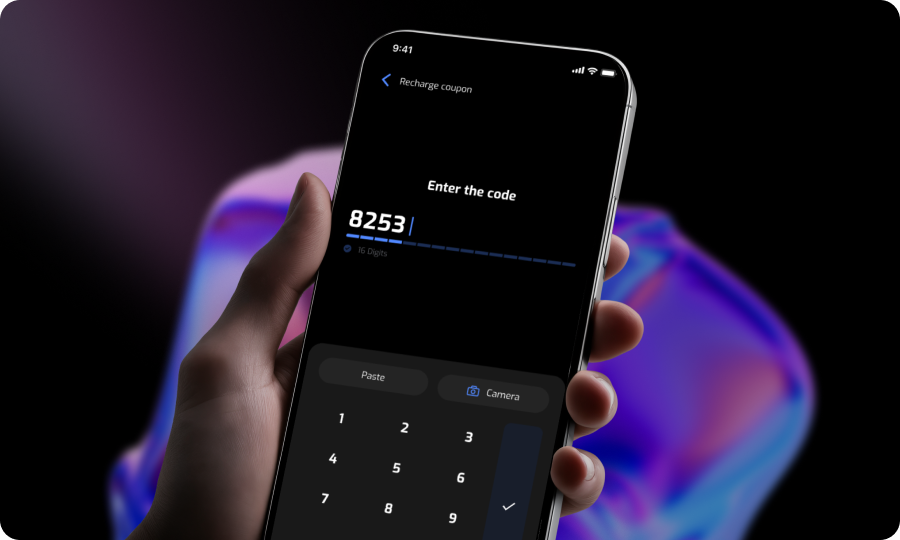
Vouchers at physical points: this is the most “offline” option of all and one of the advantages that only Bitsa has. You go to an associated establishment (there are hundreds spread across Spain), pay in cash and they give you a code. You enter that code in the app and the balance appears instantly. In Bitsa, for example, the app has a map with all the nearby points so you do not have to search.
Why Bitsa is useful for someone who has just arrived
The answer to the question above is quite clear. Bitsa is useful if you have just arrived because it calms just the headaches of the first days. They do not ask you for registration or credit history. With the passport or the NIE you can already open the account. The virtual card is ready almost instantly, so the same day you register you can already pay for online purchases or subscriptions.
The physical card arrives in a few days and, if you need it urgently, there is an express shipping option. To put money in it, you have already seen that you are not limited to a single route. You can recharge with crypto, transfer or in cash by buying vouchers.
In addition, it has its own IBAN, which means you can receive transfers like in any traditional account. And everything is managed from the app. You can see the balance, block the card if you lose it, download statements, whatever you need.
I am not going to tell you that it is the perfect solution for everything, but without a doubt for those first months in Spain, while you organise the paperwork, it is the best.
What happens when you get your bank account
The prepaid card does not become useless when you get a bank account. In fact, many people who already have a bank account in Spain continue to use the prepaid card as a complement.
For what? Well, it continues to be the best option for online purchases where you do not want to put the details of your main bank. To separate leisure expenses from the rest. For subscriptions that you prefer to control separately. Or simply because you already have certain payments configured in the app and you do not feel like changing everything.
The prepaid card does not replace the bank account, but it gives you an extra layer of control and flexibility. And that, when you are organising your life in a new country, is appreciated.
If you want to have all-terrain prepaid card, it will not take you more than 10 minutes to open your account in Bitsa and start making your payments. What are you waiting for?
FAQs
Can I get a prepaid card without having a bank account in Spain?
Yes. Prepaid cards like Bitsa do not require a Spanish bank account. You only need a valid identity document (passport, NIE or DNI from your country) and complete the online verification.
What documents do I need to get a prepaid card?
Generally, they only ask for an identity document (passport, NIE, TIE or foreign DNI), European residence permit if applicable, and complete the KYC process (photo of the document + selfie) from the app.
Do I need registration or payslip to open a prepaid card?
No. Prepaid cards issued by electronic money entities do not require registration, payslip or proof of income. The sign-up is 100% online.
How long does it take for the card to be ready?
The virtual card is usually available in less than 10 minutes after completing registration and verification. The physical card arrives in a few days, with express shipping option if you need it urgently.
How can I recharge the card if I do not have a bank account in Spain?
There are several options: with cryptocurrencies from your wallet, international transfer from your country of origin, or buying physical vouchers at associated establishments (you pay in cash and enter the code in the app).
Is it good for paying public transport or the supermarket?
Yes. You can use it in supermarkets, pharmacies, public transport (metro, bus), online shops like Wallapop, and services like Uber or Cabify.
What happens if I lose the card?
You can block it instantly from the app. The balance at risk is only what you have loaded, there is no exposure to a complete bank account.
Can I receive transfers on this card?
Yes. Cards like Bitsa have their own IBAN, so you can receive transfers like in a traditional account.